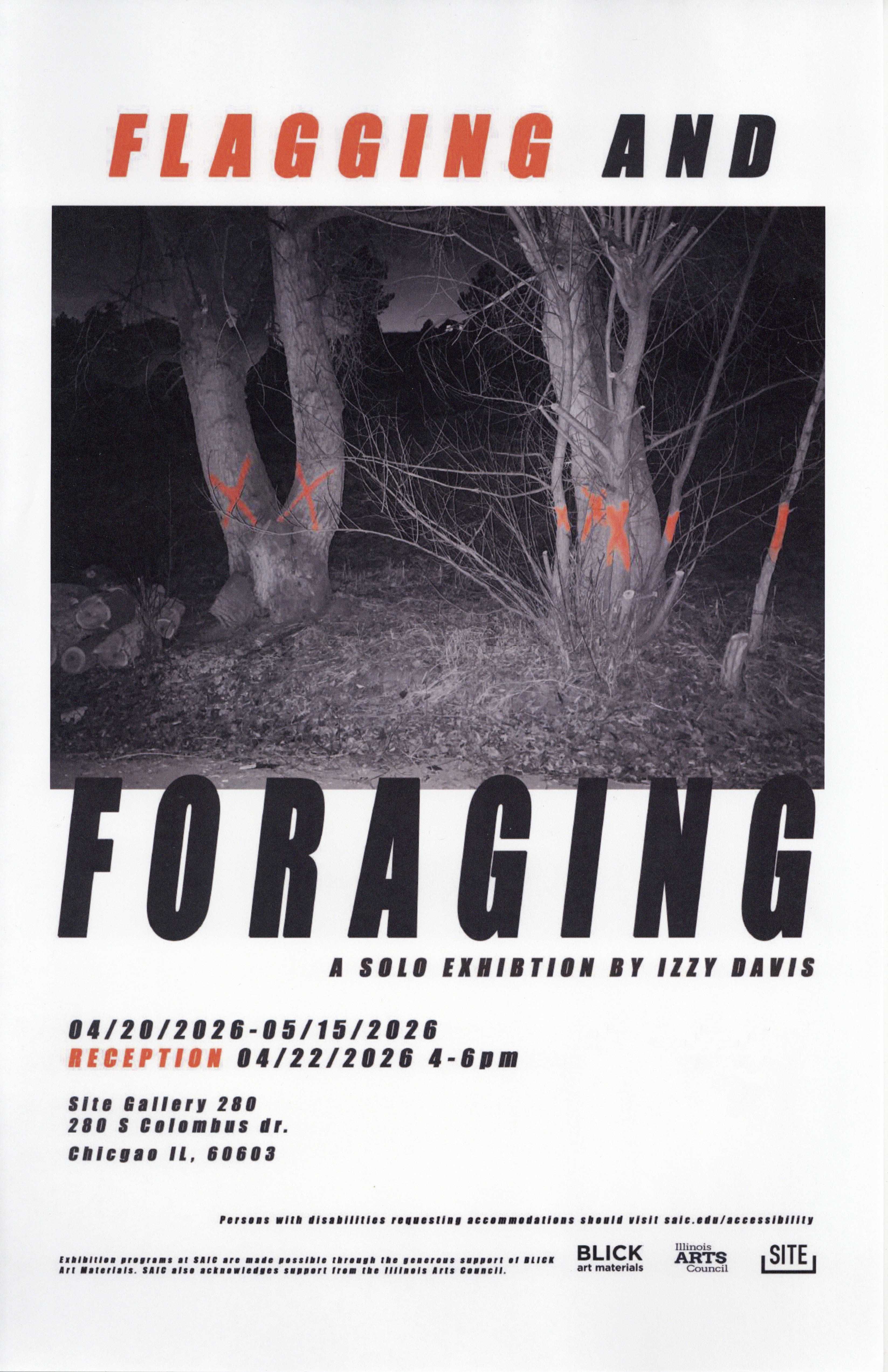
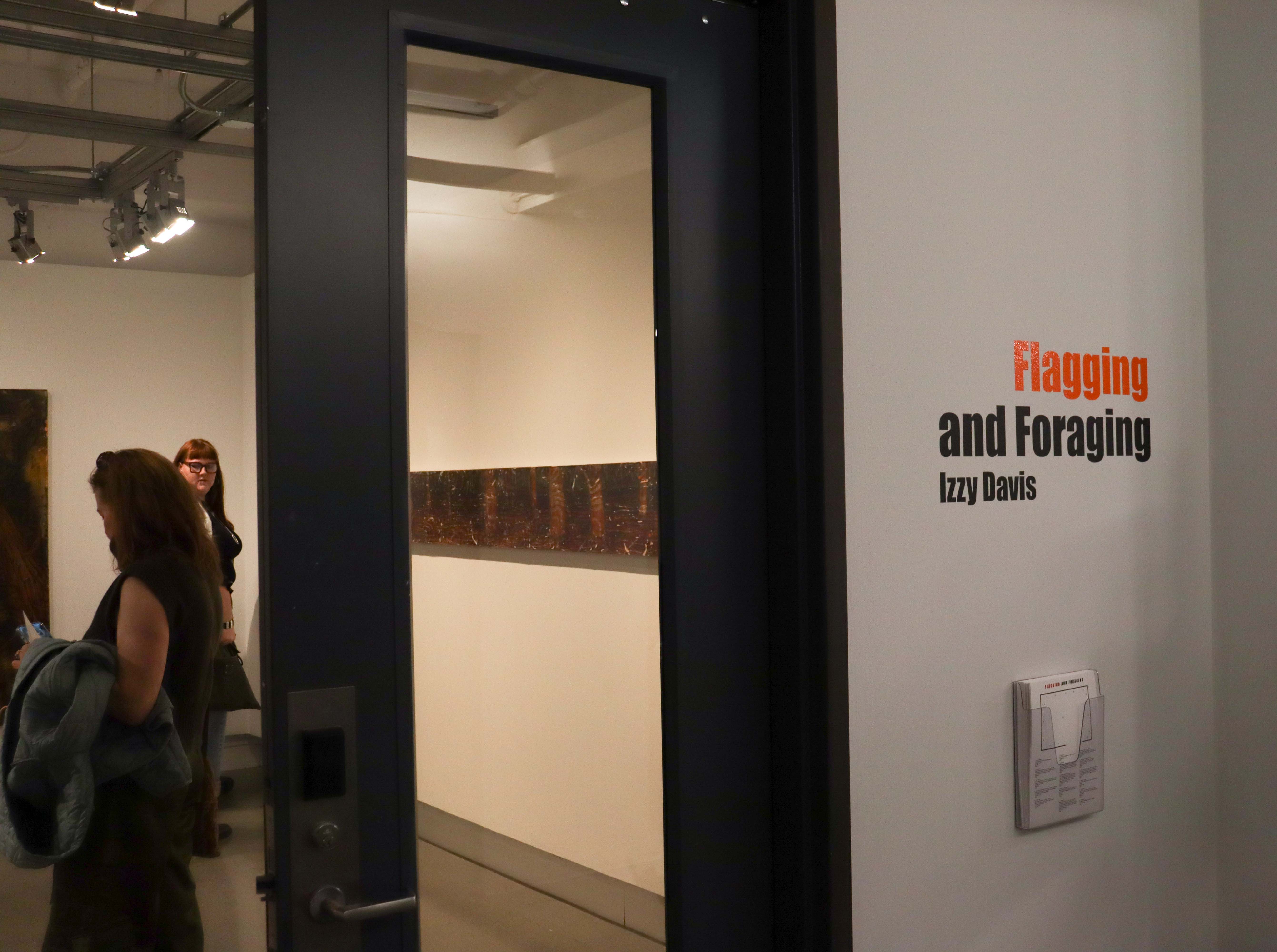
Flagging and Foraging
Izzy Davis
April 20 – May 15, 2026
SITE 280 Gallery
Contributing Artists
Izzy Davis
Exhibition Statement as Preserved in the SUGS/SITE Archives:
Do clearcutters dream ofthe sounds trees make as they are sawed down in forests, the
same way l dream about the sound a tree might make in a forest l’m not at all in?
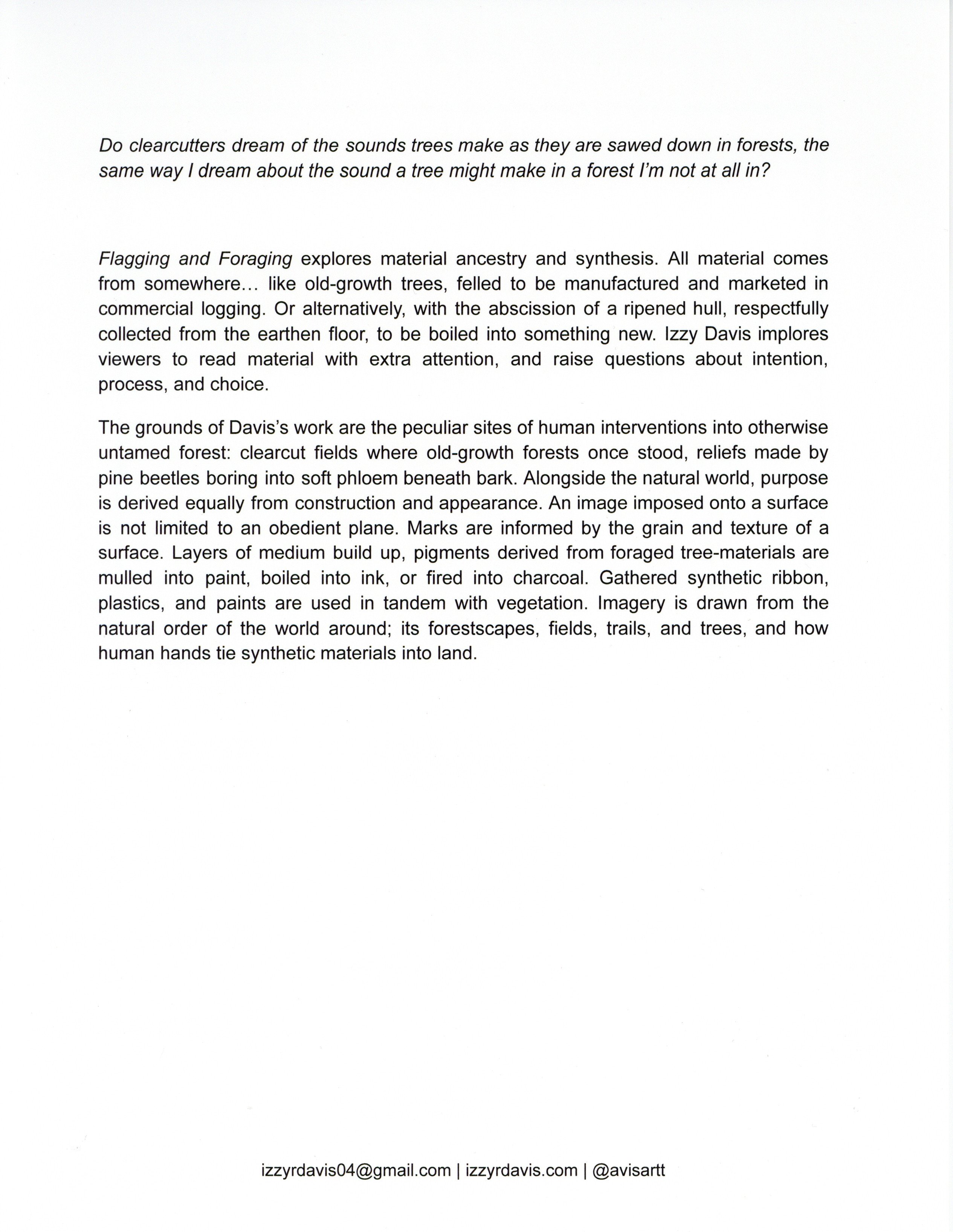
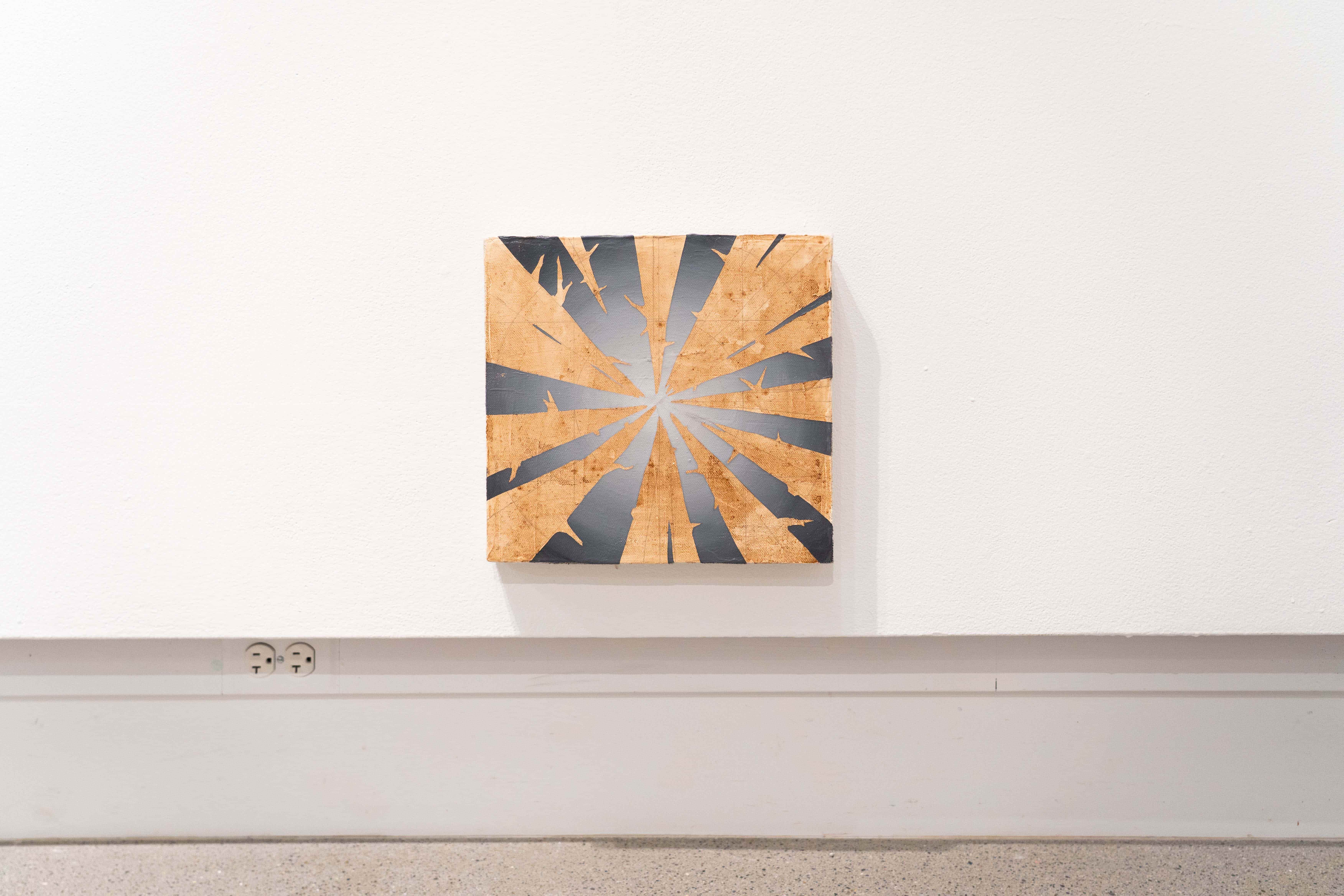
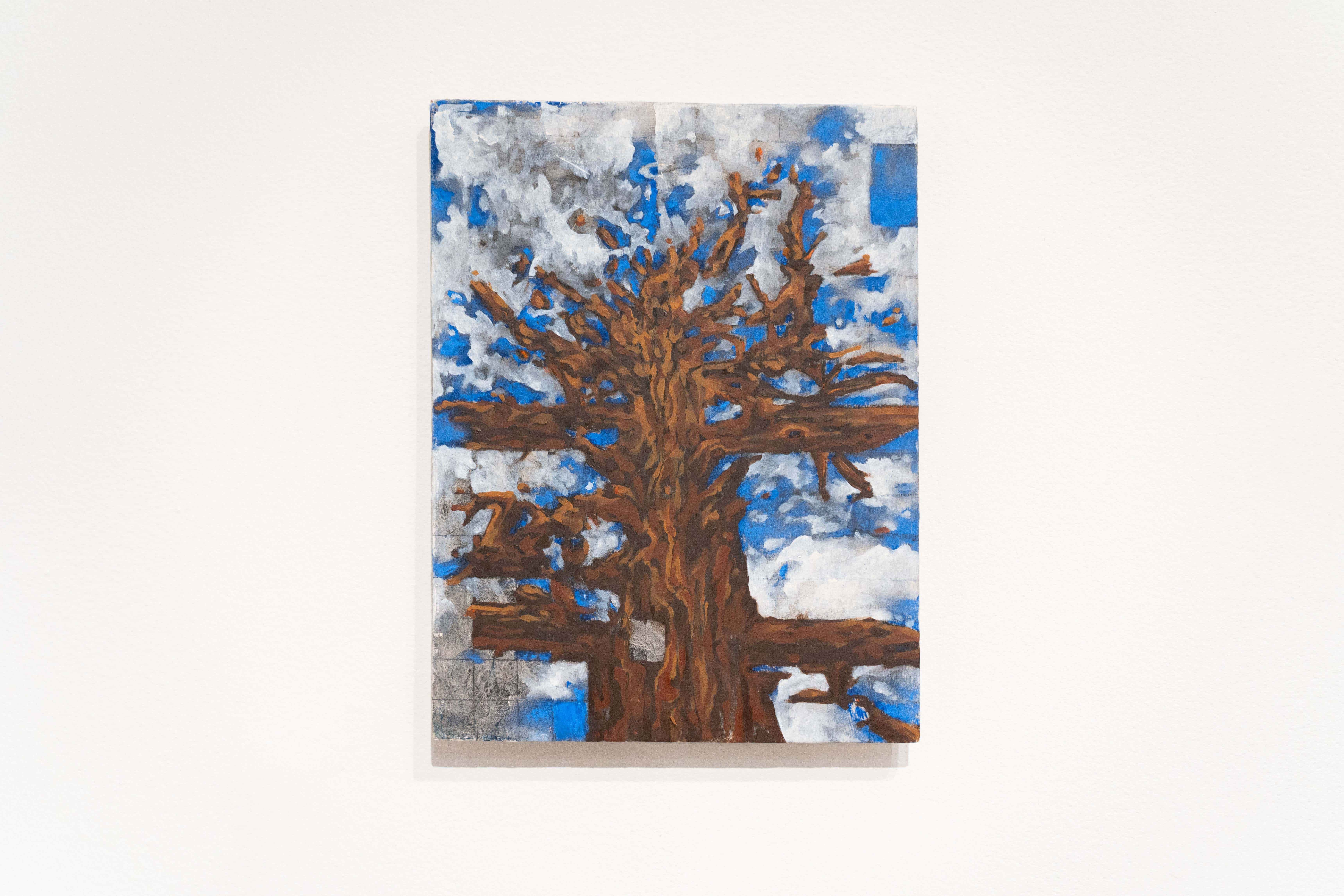
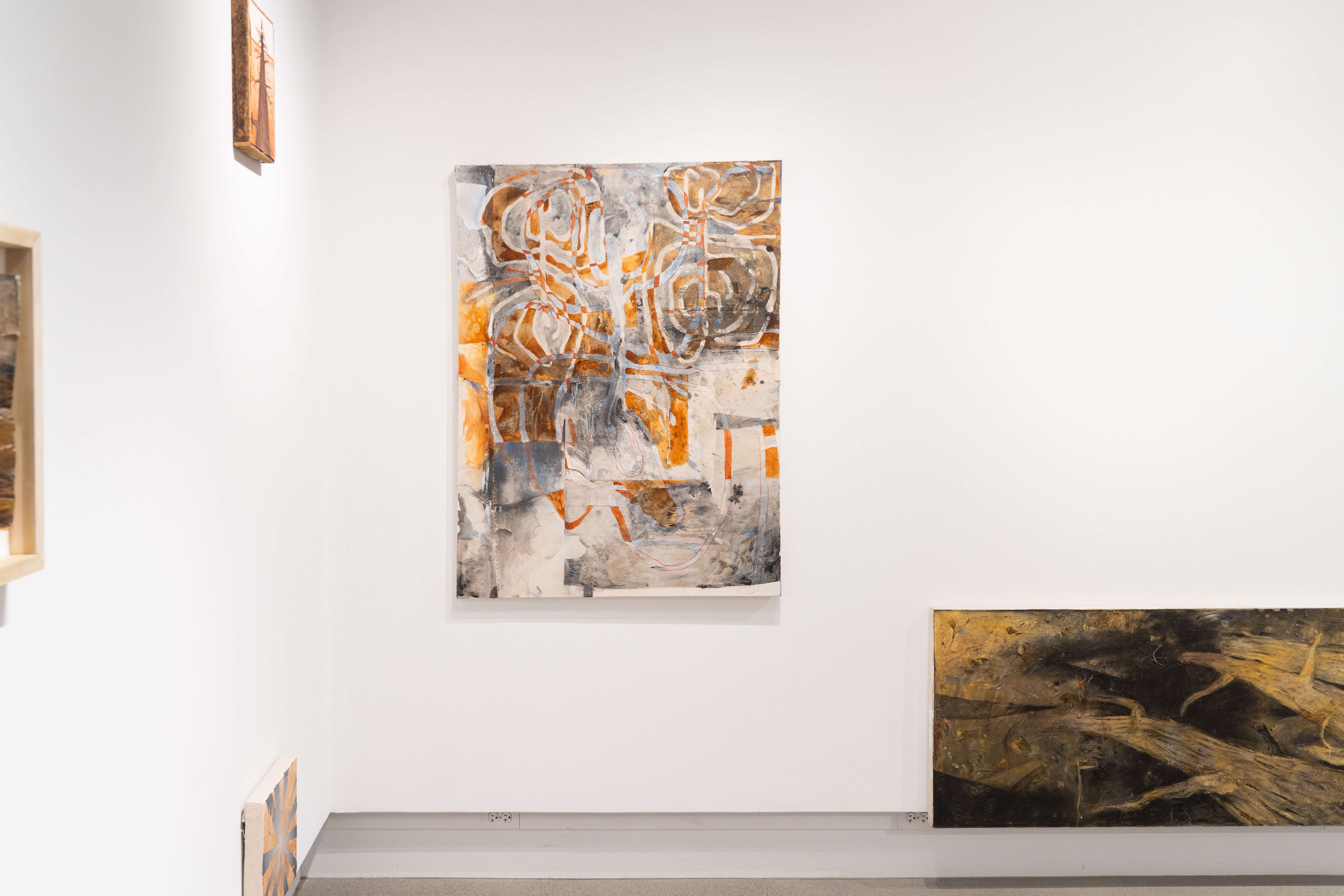
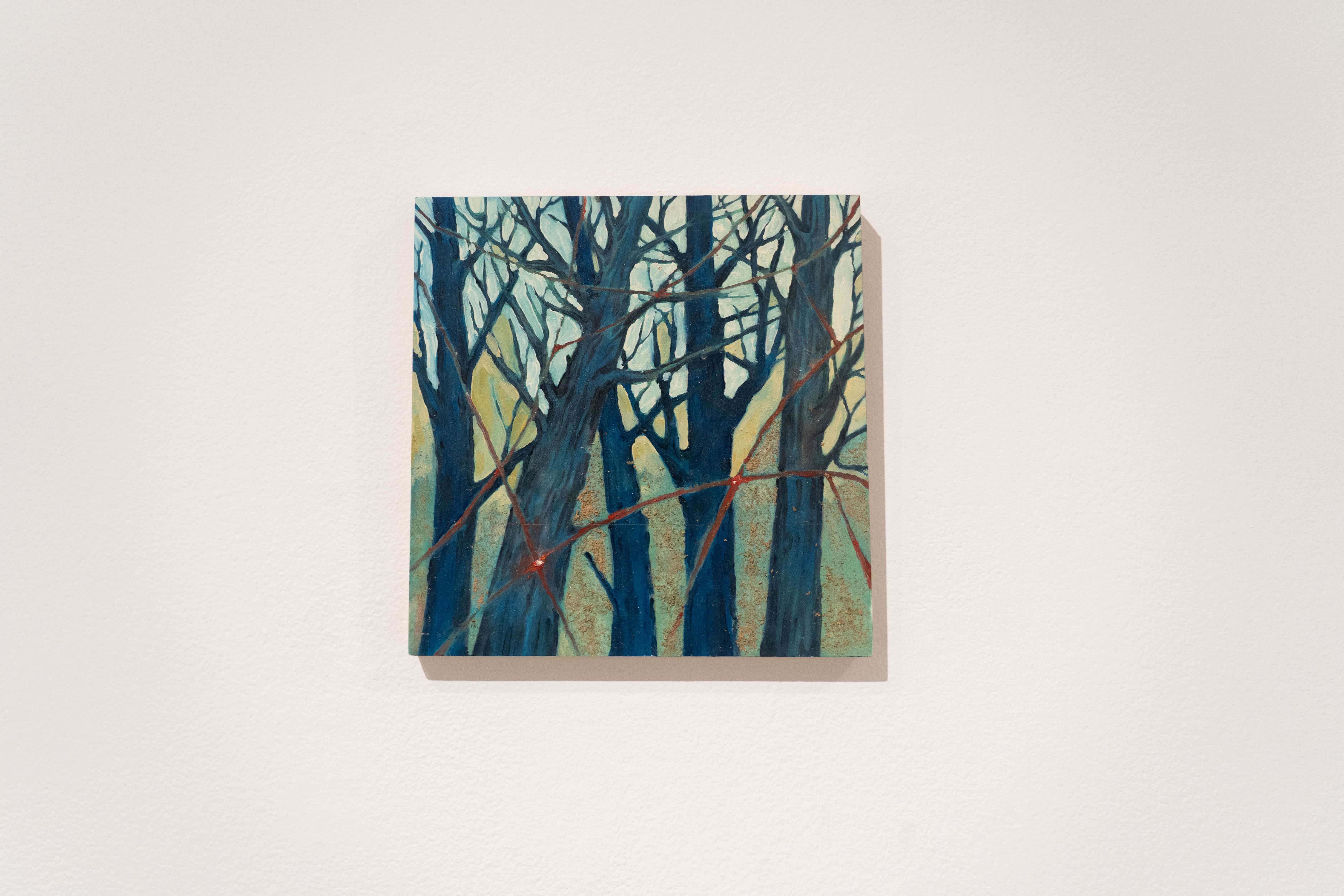
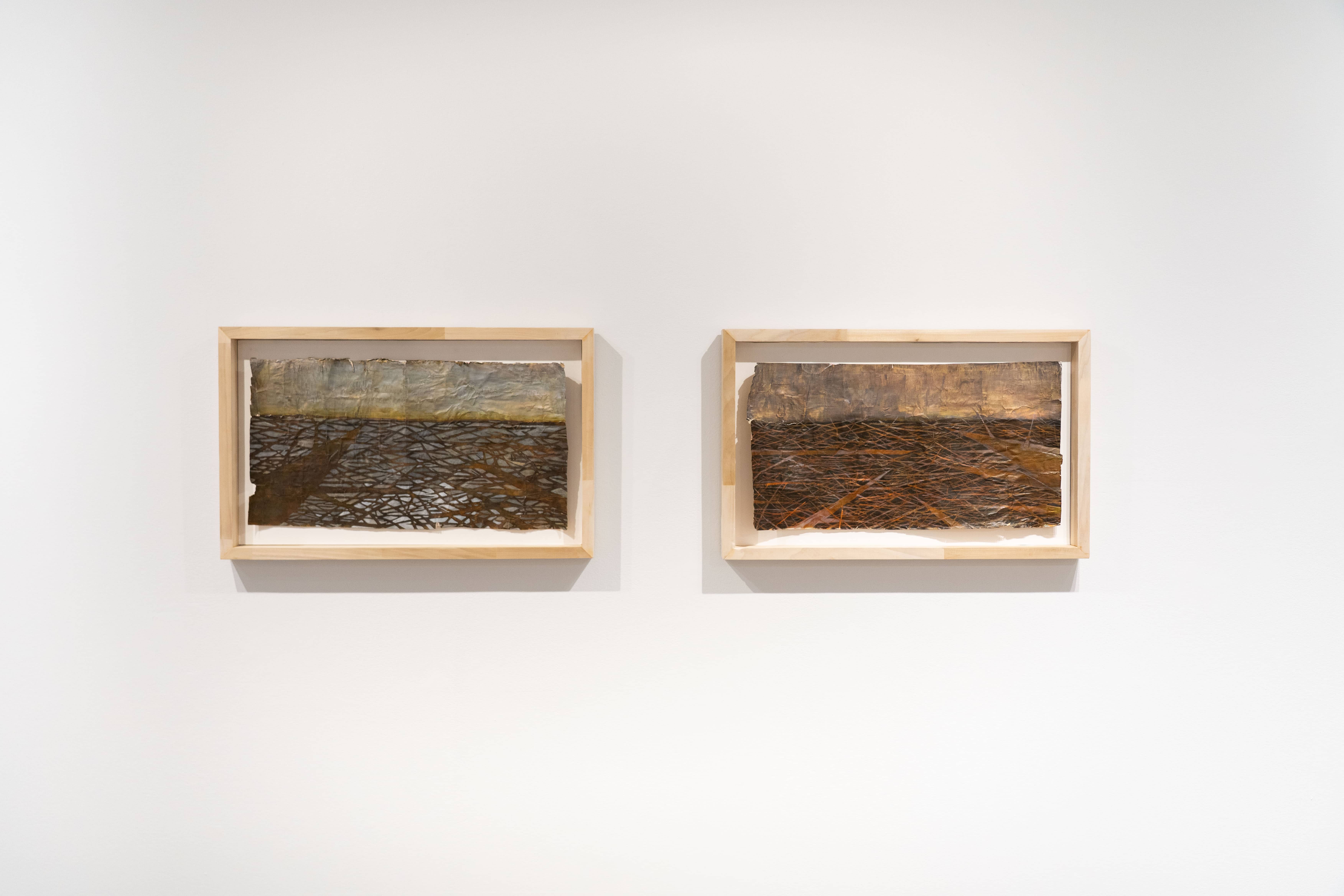
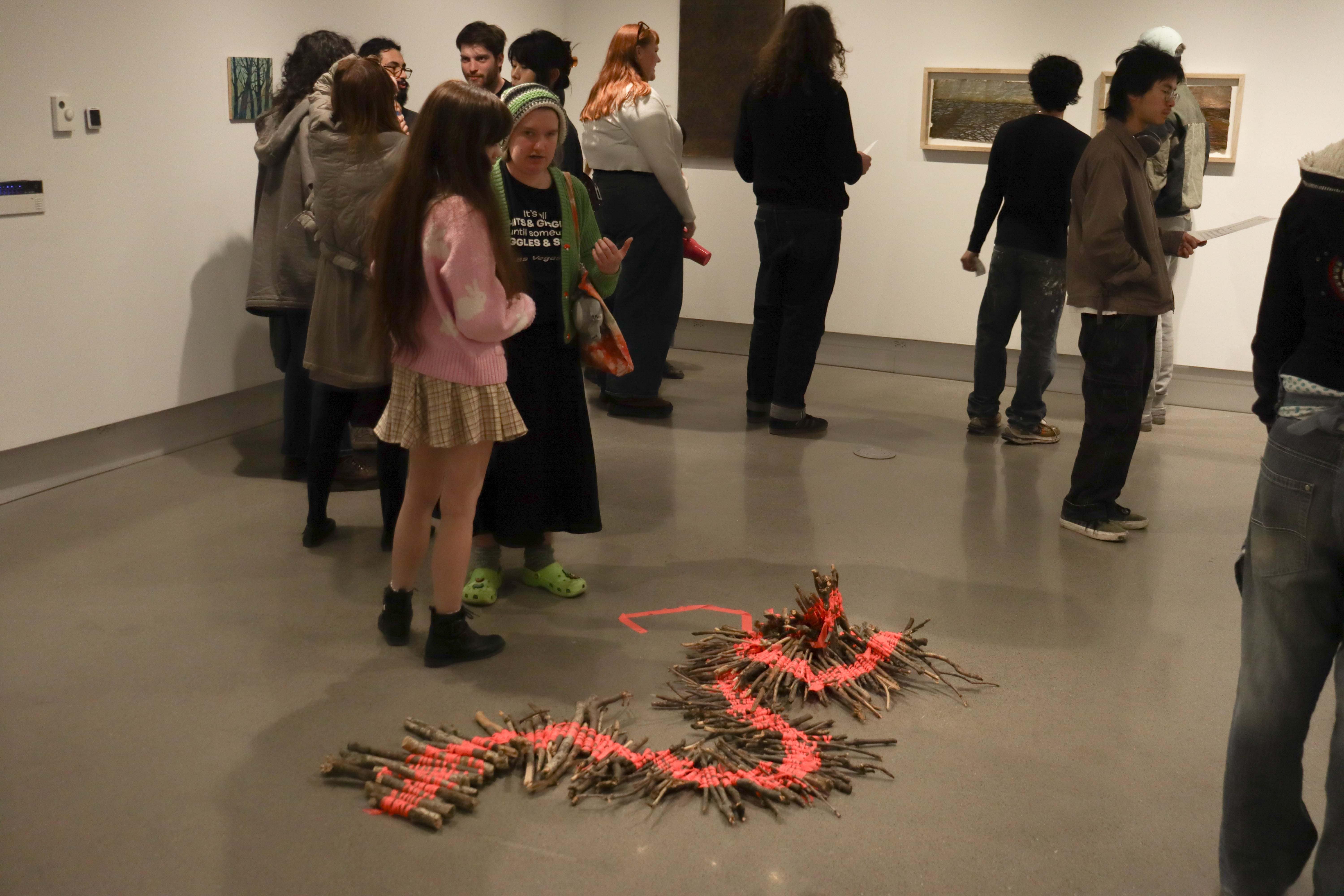
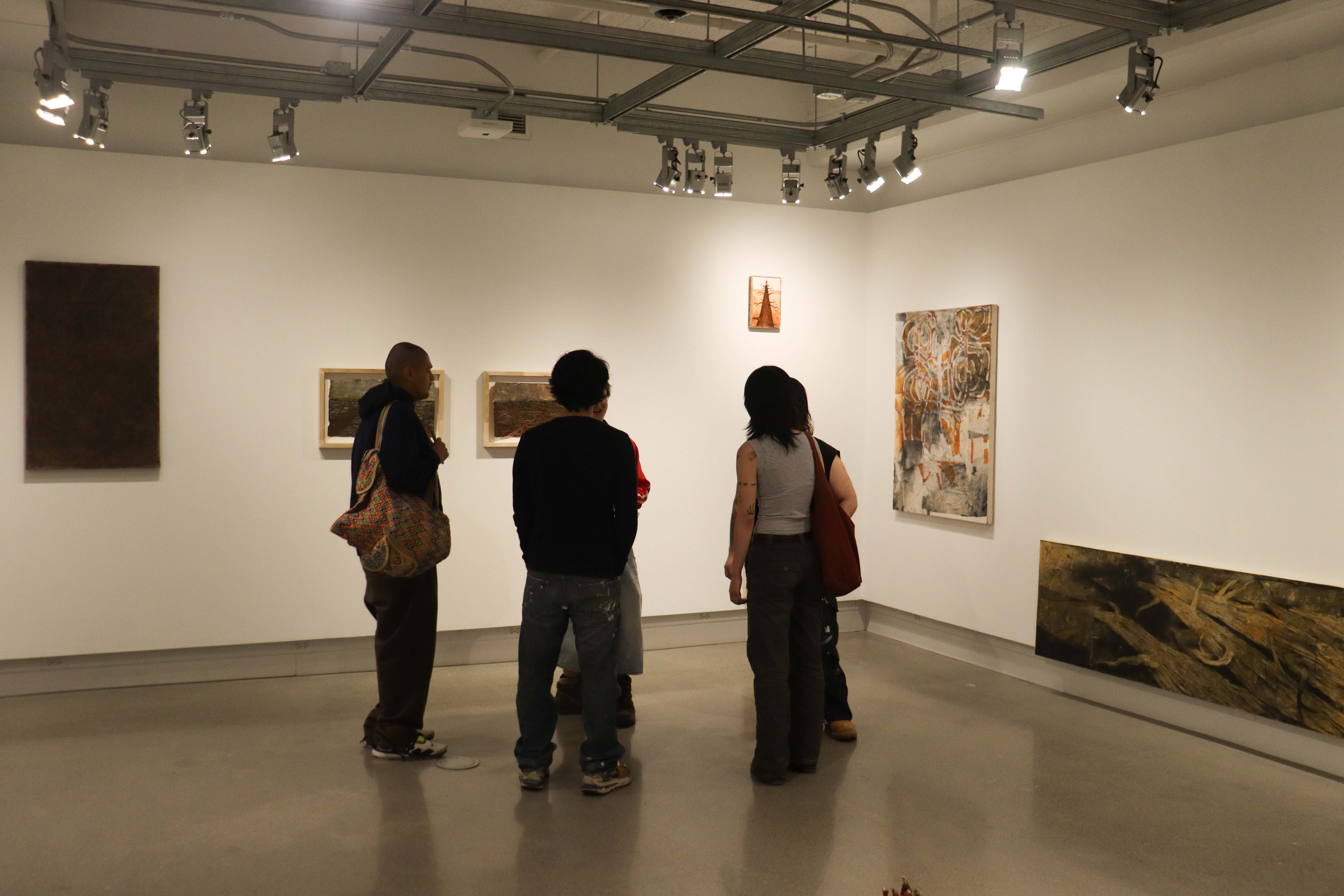
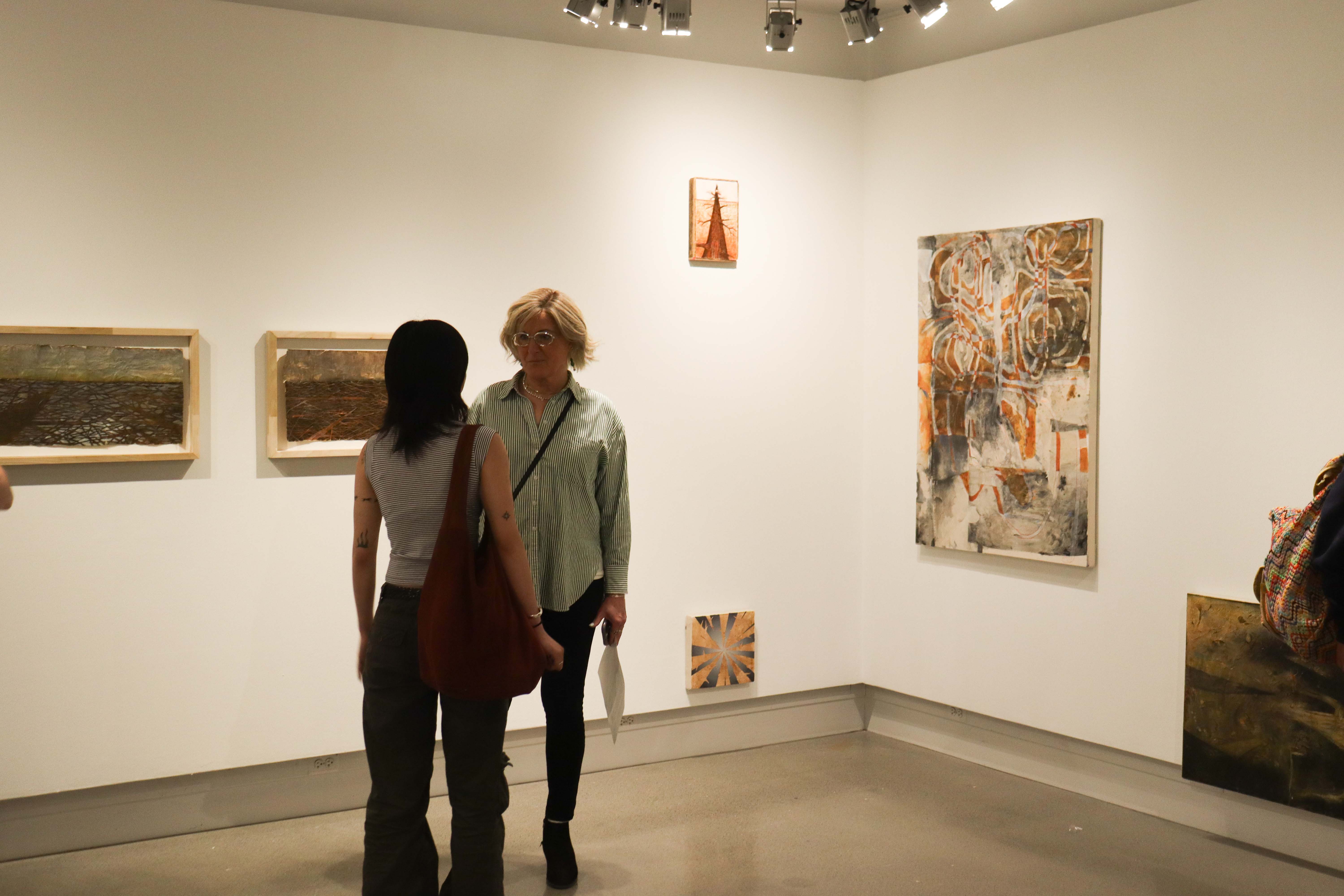
Flagging and Foraging explores material ancestry and synthesis. All material comes
from somewhere… like old-growth trees, felled to be manufactured and marketed in
commercial logging. Or alternatively, with the abscission of a ripened hull, respectfully
collected from the earthen floor, to be boiled into something new. Izzy Davis implores
viewers to read material with extra attention, and raise questions about intention,
process, and choice.
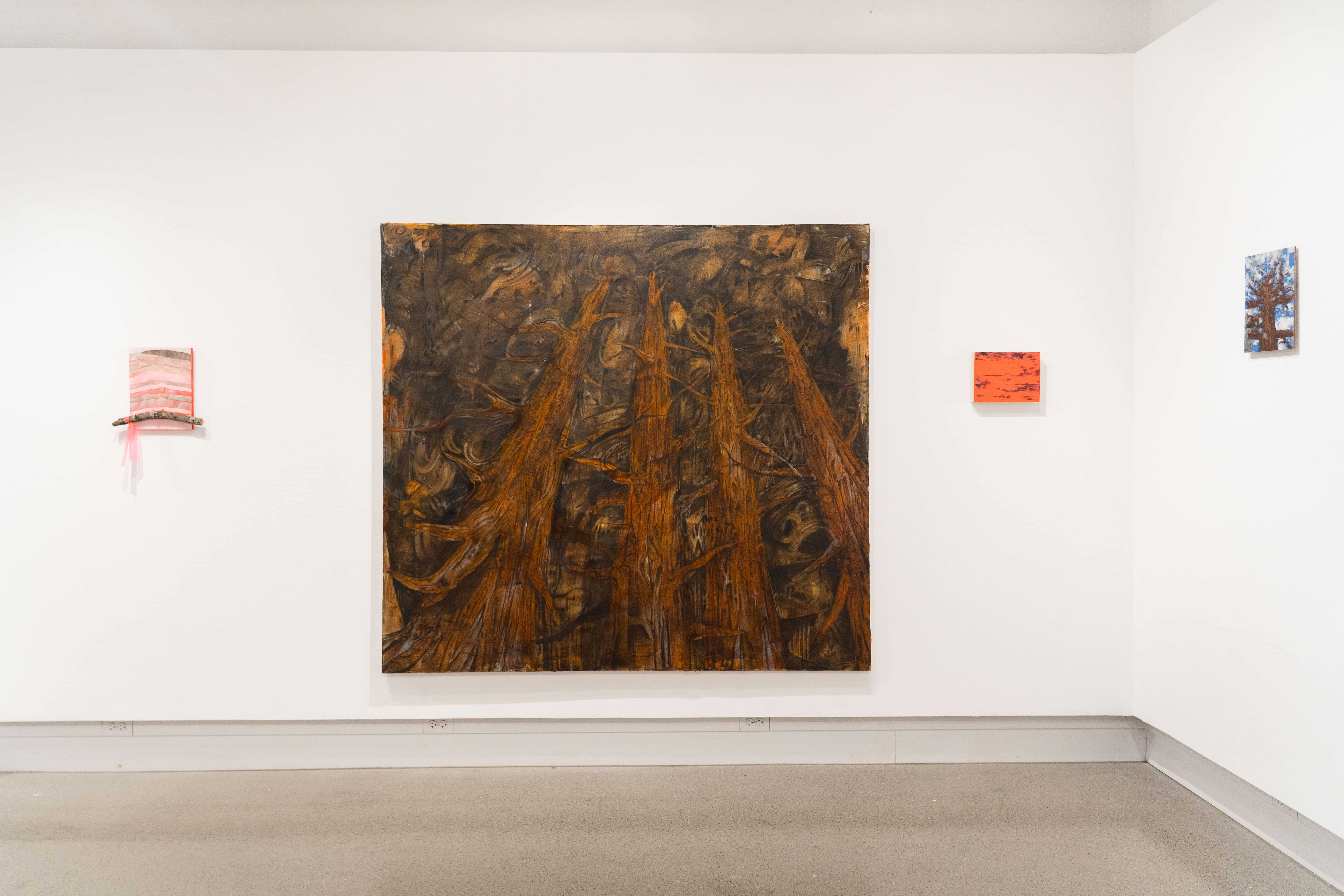
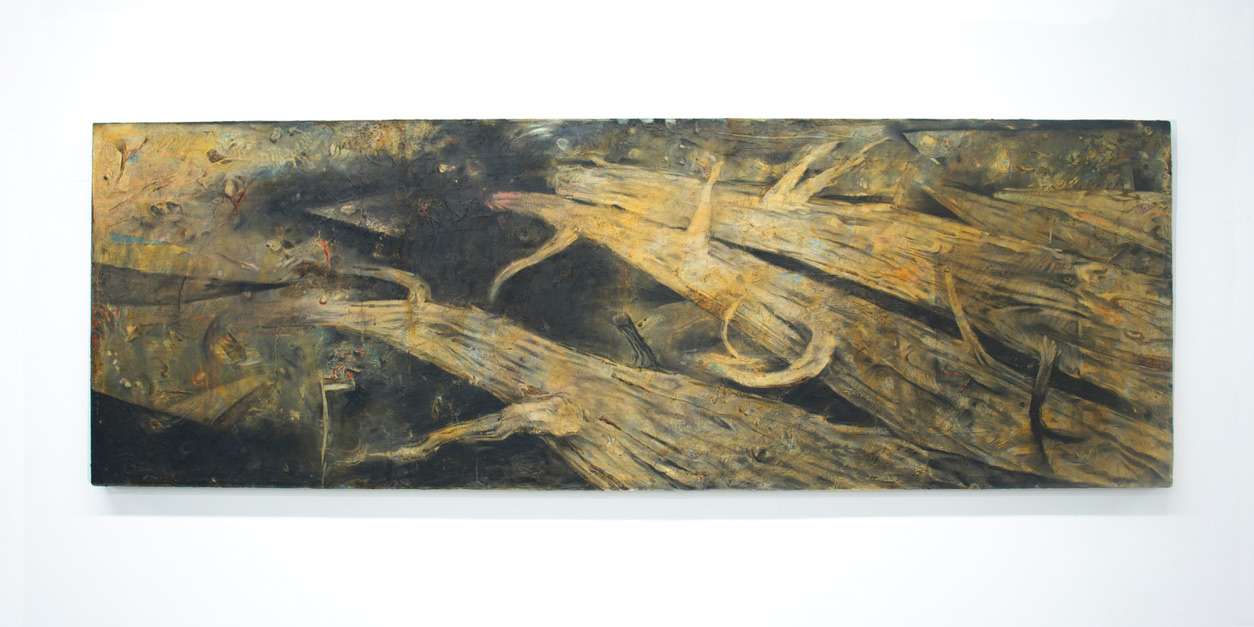
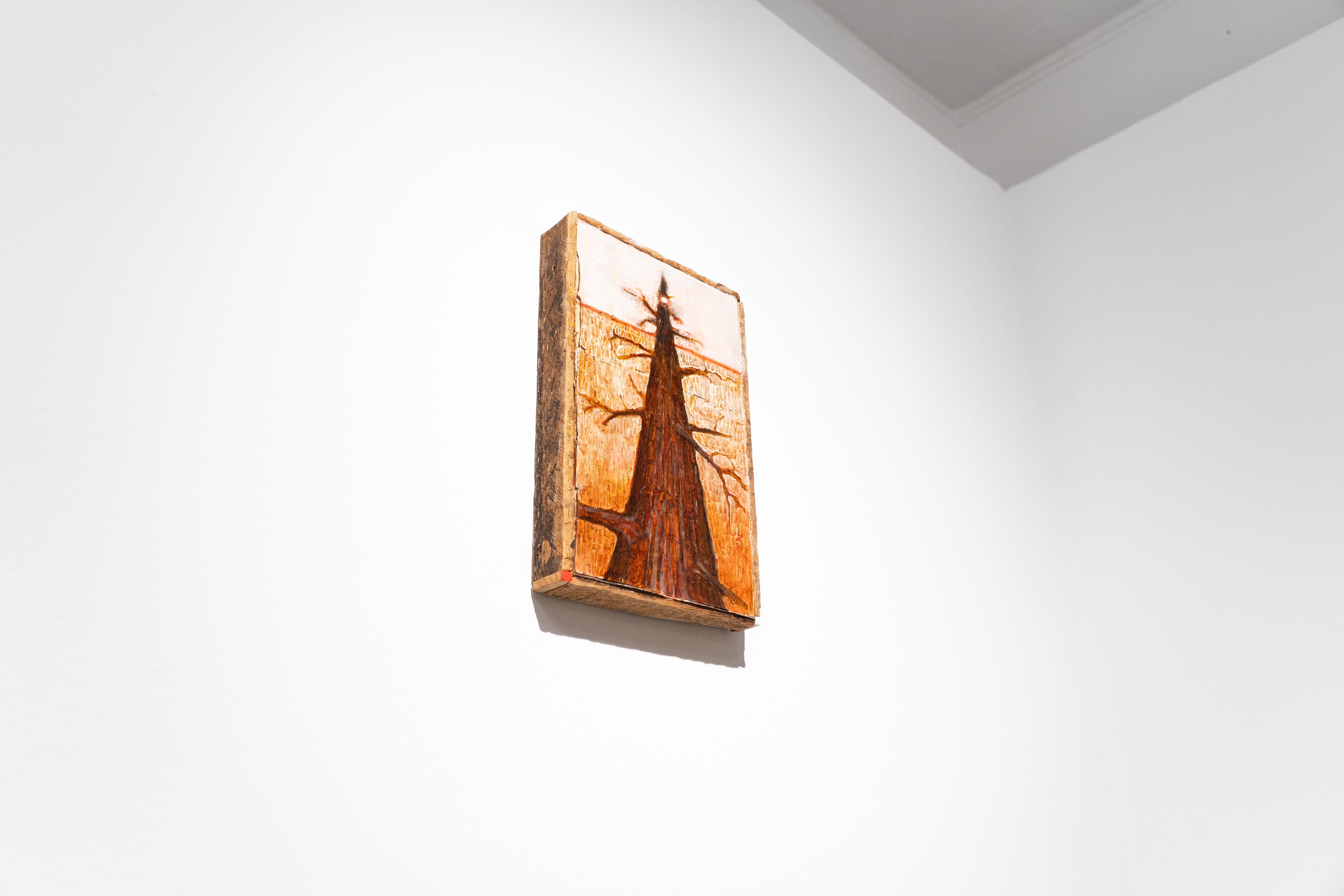
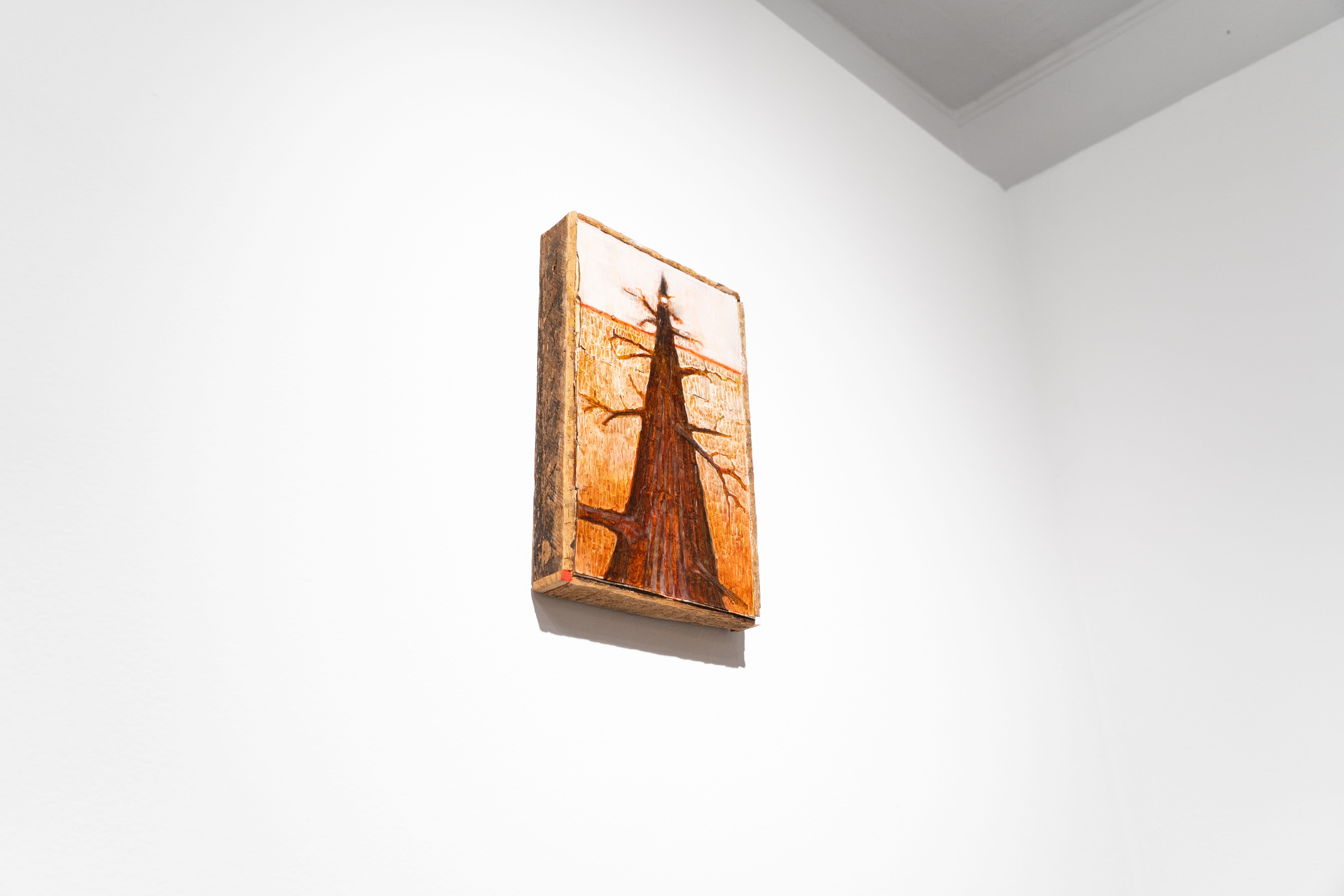
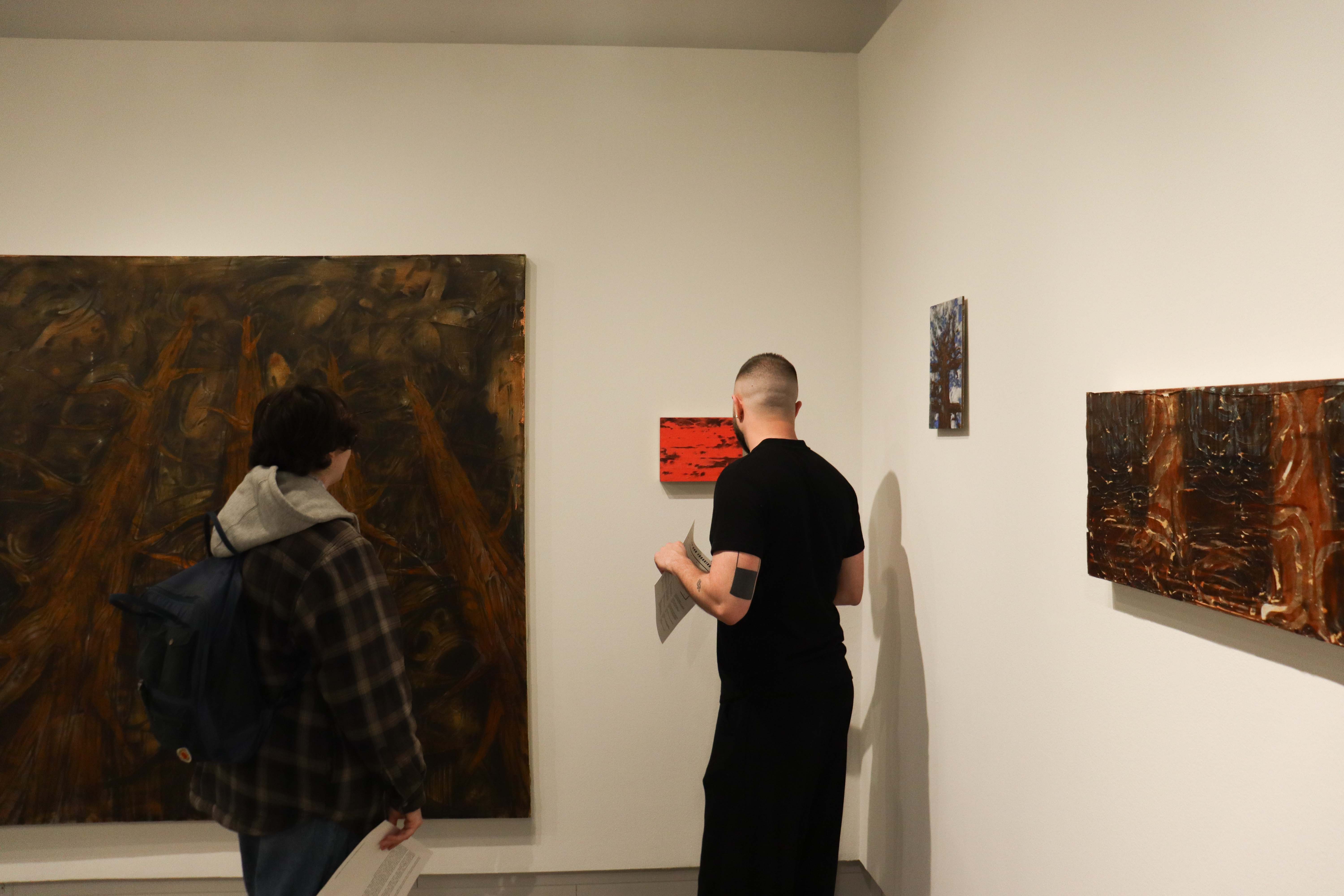
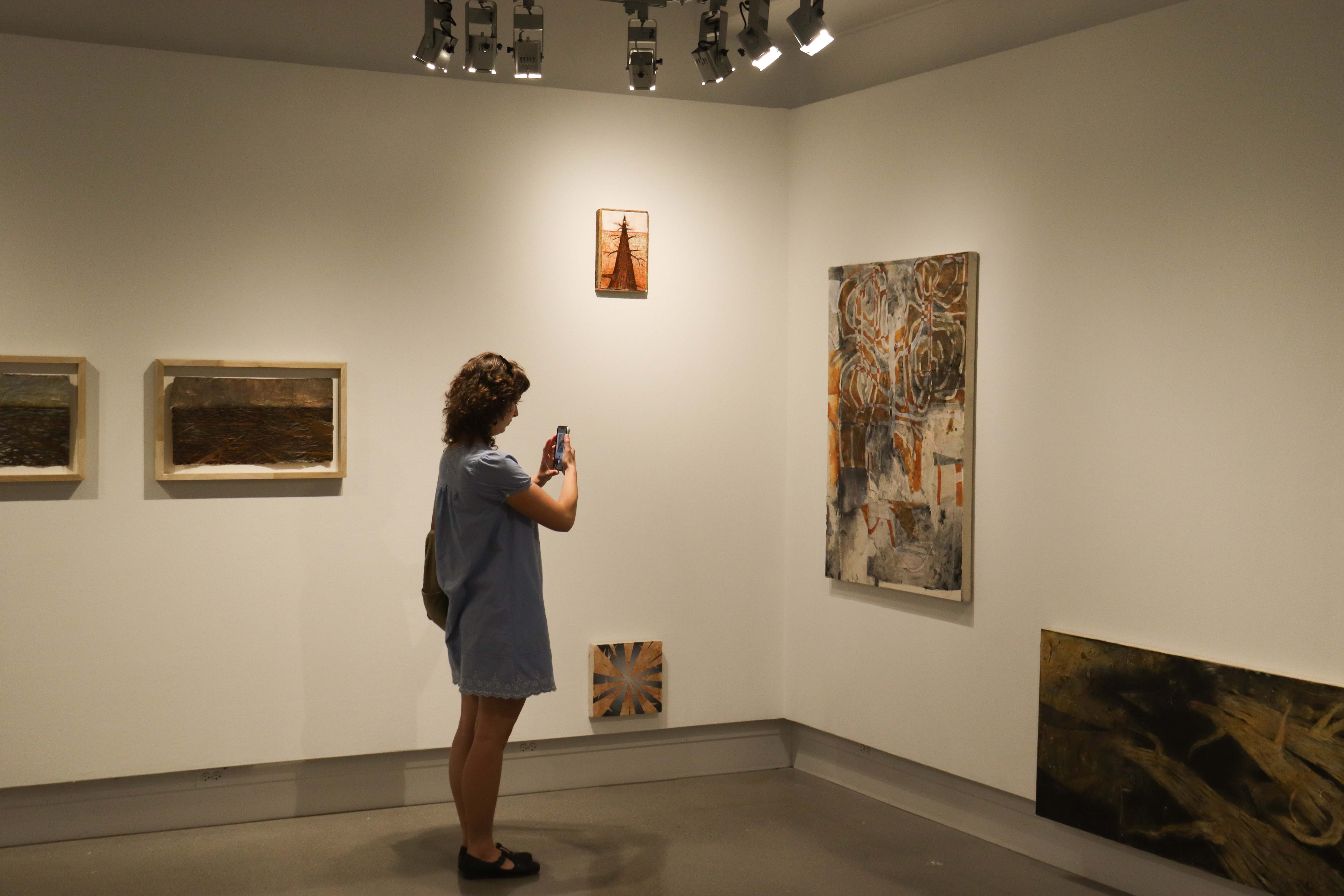
The grounds of Davis’s work are the peculiar sites ofhuman interventions into otherwise
untamed forest: clearcut fields where old-growth forests once stood, reliefs made by
pine beetles boring into soft phloem beneath bark. Alongside the natural world, purpose
is derived equally from construction and appearance. An image imposed onto a surface
is not limited to an obedient plane. Marks are informed by the grain and texture of a
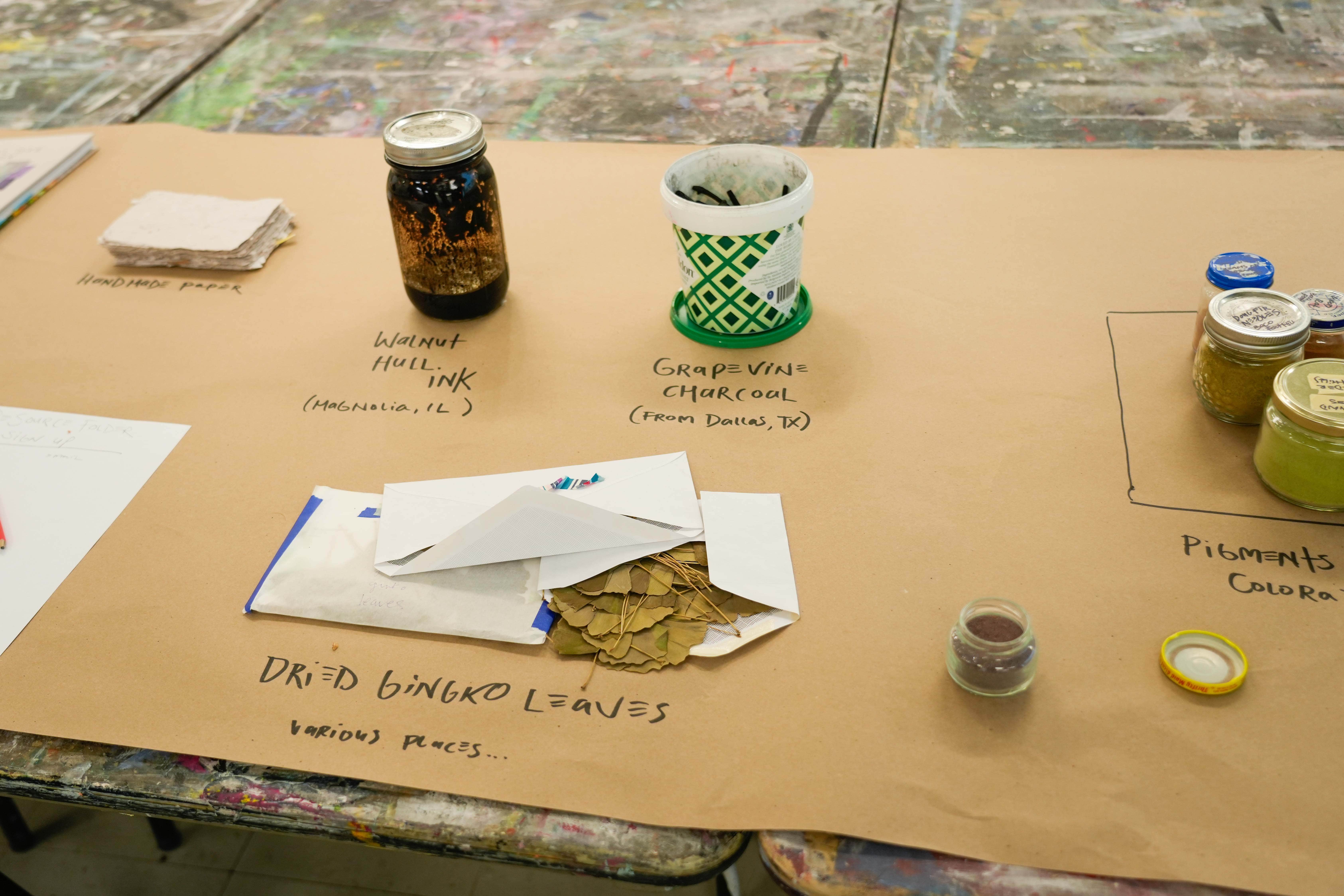
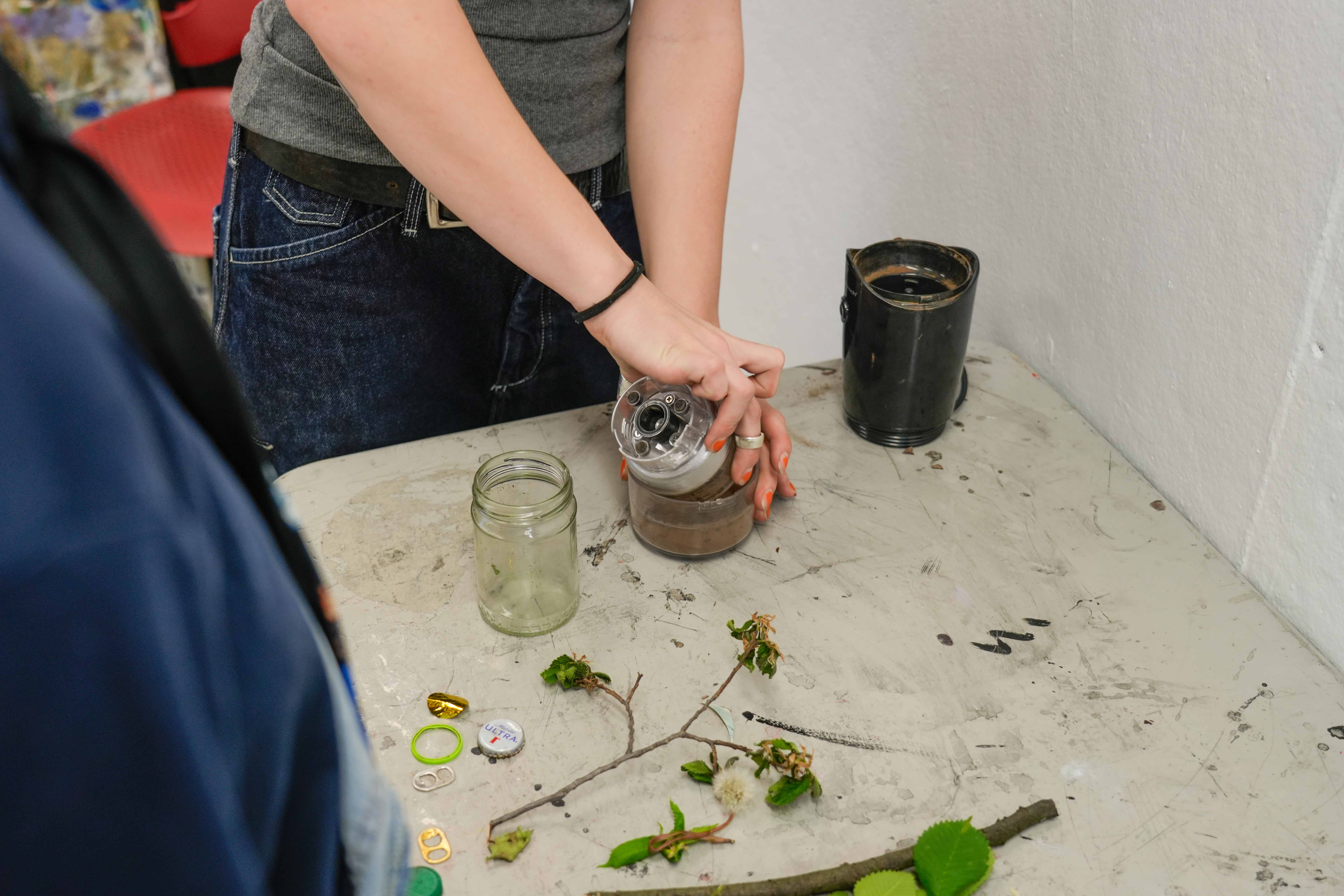
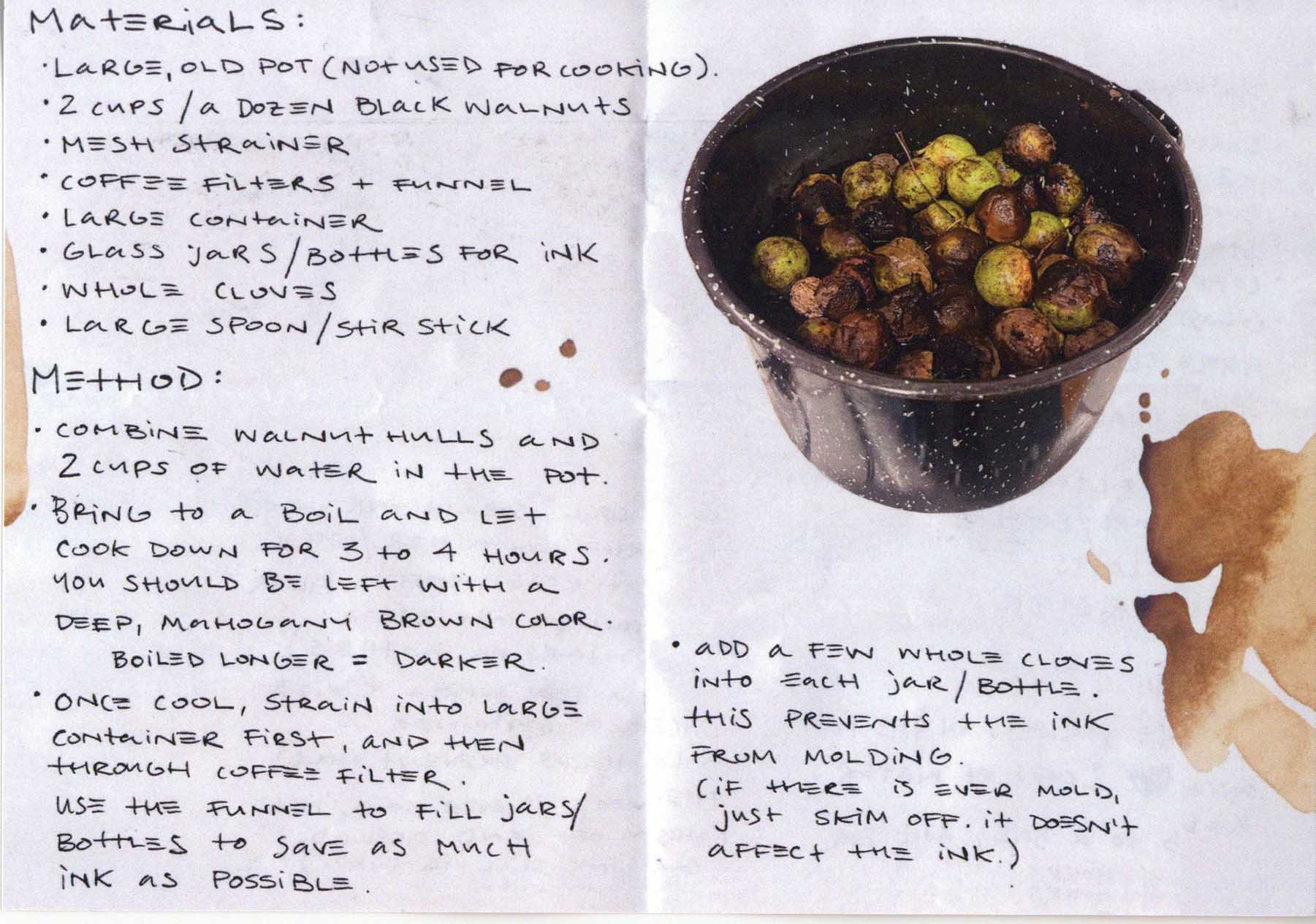
surface. Layers of medium build up, pigments derived from foraged tree-materials are
mulled into paint, boiled into ink, or fired into charcoal. Gathered synthetic ribbon,
plastics, and paints are used in tandem with vegetation. Imagery is drawn from the
natural order of the world around, its forestscapes, fields, trails, and trees, and how
human hands tie synthetic materials into land.
Interview With Izzy Davis
What’s your earliest art memory?
There’s this art studio in Boulder[, Colorado] that I think was called Tangerine, and I did art class there as a kid. We did one project where we had to build dioramas, and they had a bunch of junk for us to go through and use, and I found this dog figurine in a spacesuit and I put that in my diorama.
My reading of your exhibition is that you’re pitting two forms of material consumption against each other. One is based on utility and a sense of gratitude for the earth’s finite natural resources, and the other, more dominant form of consumption is based solely on profit and the accumulation of capital, at the expense of entire ecosystems. Growing up, which of these forms of consumption were you made aware of first, and how did one influence your understanding of the other?
I grew up in the foothills of Colorado, so I was surrounded by trees and dirt roads. I had four neighbors that I grew up with who were around my age, and we spent a lot of time outside playing with sticks and in the mud and in the creek and all that. So I think primarily it was more of the natural side [of consumption], but at the same time, my dad was always with his chainsaw, cutting down trees that needed to be mitigated because fire seasons there get pretty bad. So we’d have foresters or the fire department come up and tell us “this is a problem tree” or “this tree is sick” or whatever. Every so often the electric company would come by, and if a tree limb was too close to the power lines, they would either mark it with that fluorescent flagging ribbon that I use a lot or a big swash of bright spray paint. Those forms are definitely in my visual vocabulary just because I grew up learning how to work with the land to figure out how we can sustain ourselves there, but also to make sure everything goes the “least wrong” if an environmental disaster happens. So that intersection between a tree existing and then us humans coming in and marking it with that bright color is kind of where that material interaction came from.
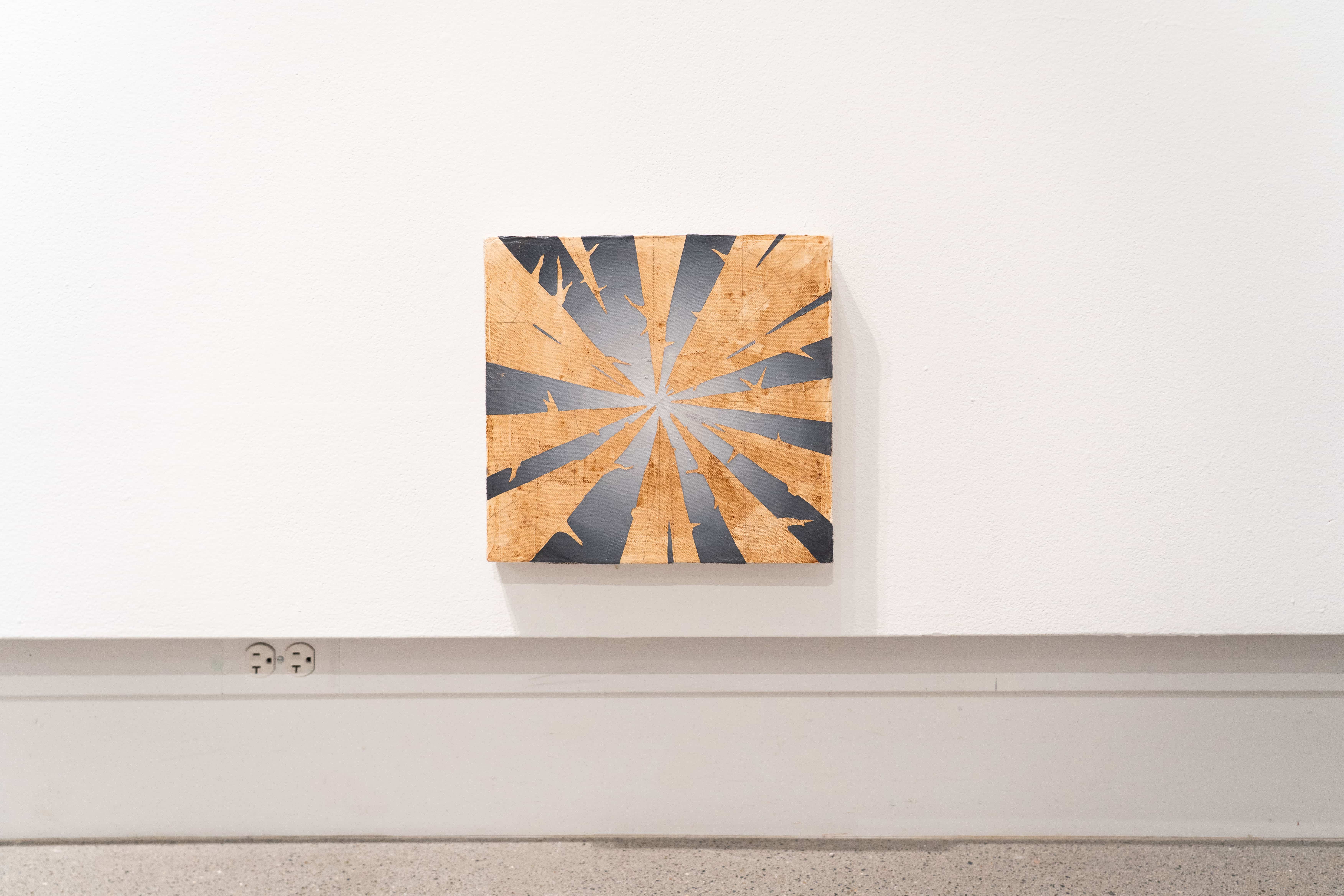
Is there some sort of meaning behind your emphasis of the vanishing point in your work?
I think the only thing I can say about that is that it just comes from looking up. When you’re underneath trees I feel like you’re always drawn to looking up through the limbs. Sometimes when trees grow super close together there’s this phenomenon that happens called “crown shyness,” where the tops of the trees don’t touch and kind of stay away from each other so that they’re not competing for sunlight. But I think the vanishing point comes from looking up and how I’m perceiving forms around me, and the paintings with converging trees is that perspective.
Do you hang on to your early work for archival or sentimental reasons or do you toss whatever you don’t like anymore?
I think I save like 98% of things just to have or look back to, or I’ll reuse it and turn it into something I can use currently. I try not to throw stuff in the bin as much as possible, because usually there’s some way that you can repurpose it. And since a lot of our art practices are so wasteful, I think about what I can do to limit that.
What was the last book you read?
I’m reading Silent Spring by Rachel Carson, which is an environmentalism book that’s pretty well known. I’m also reading a collection of Mary Oliver poems.
Do you have any daily rituals?
Right now? Not really. I think with graduating and the craziness of this semester I’ve let them go for the time being. Also being in a big city makes some of the things I used to do a little bit harder. When I’m in Colorado I’m usually outside in the morning and spending time sitting on a porch in nature, not having any media to consume, just being present in that moment. I think that has informed my writing practice, just sitting and observing and thinking and seeing what comes from that, but that’s not something I’m actively doing right now.
If the Art institute was on fire and you could only save one artwork, which one would it be and why?
There’s a few old Piet Mondrian paintings that predate his colored square ones where he’s painting landscapes, these beautiful scenes from wherever he was living. If you look at his work over time, you can see how he’s painting trees and how they slowly became abstracted into the more familiar red, yellow, blue square paintings we know. Those are probably the ones I would save, just for their art historical aspects.
Interview conducted and edited by Eugenio Salazar Castro
Programs
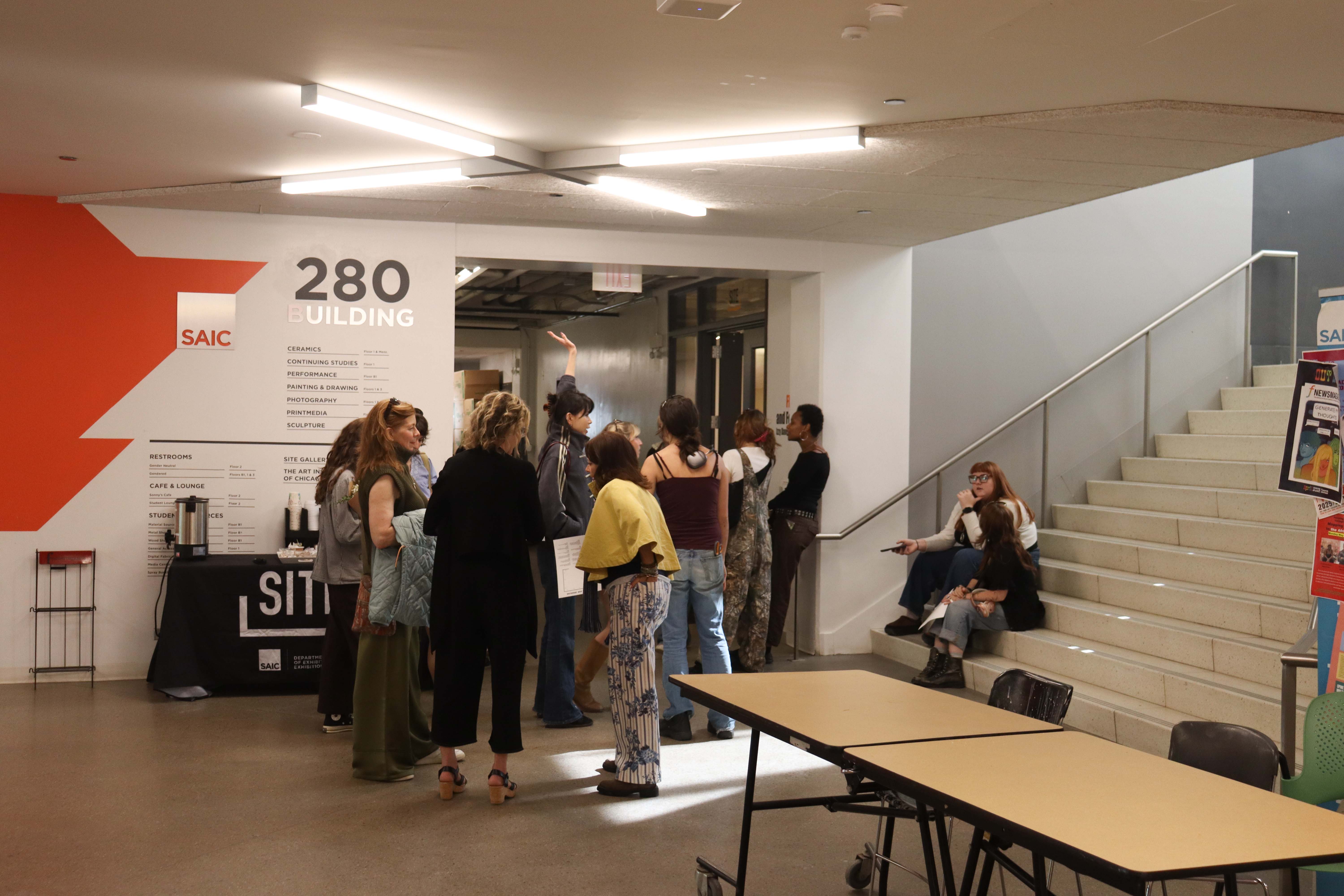
Opening Reception
April 22, 4:00 – 6:00pm
280 Gallery
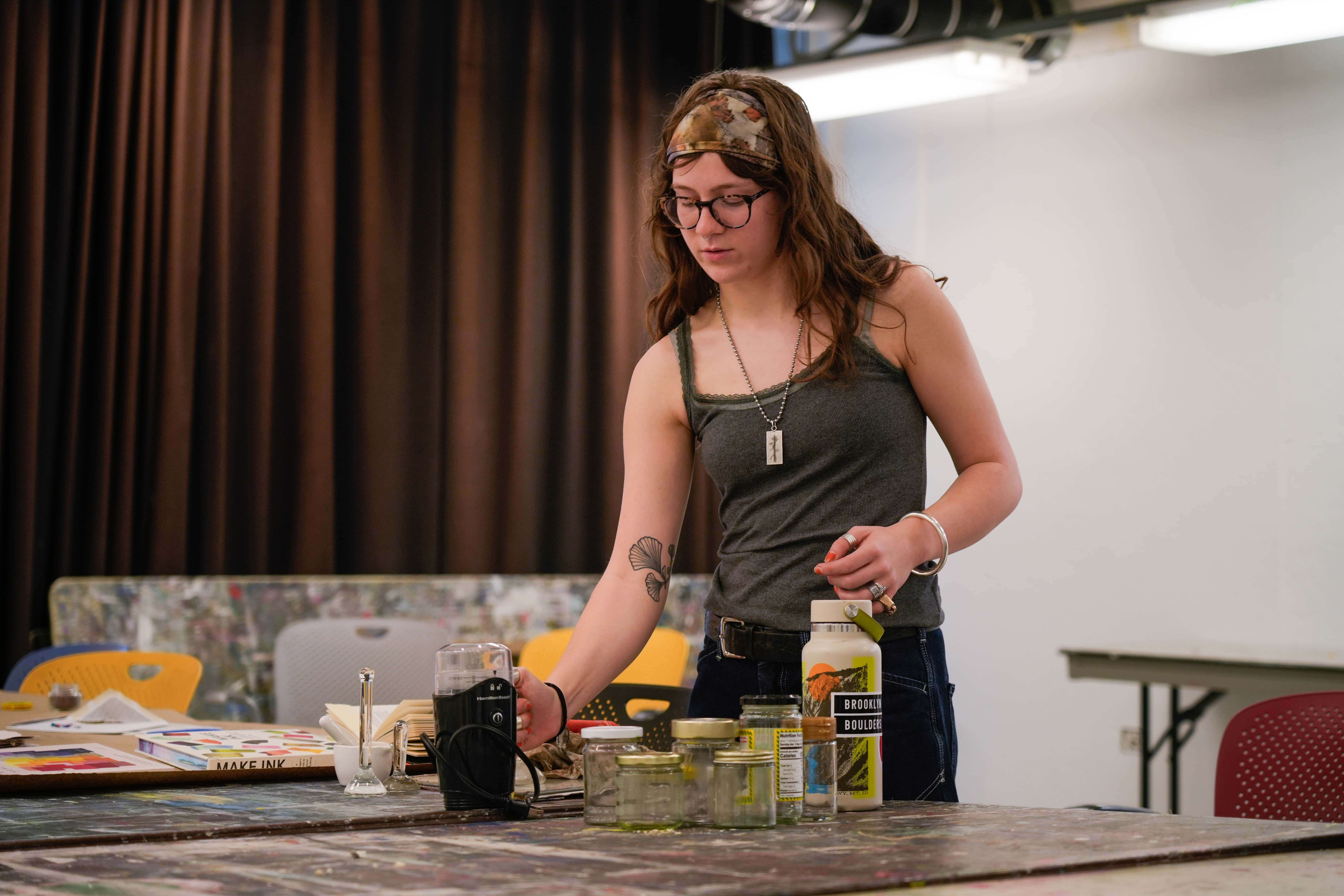
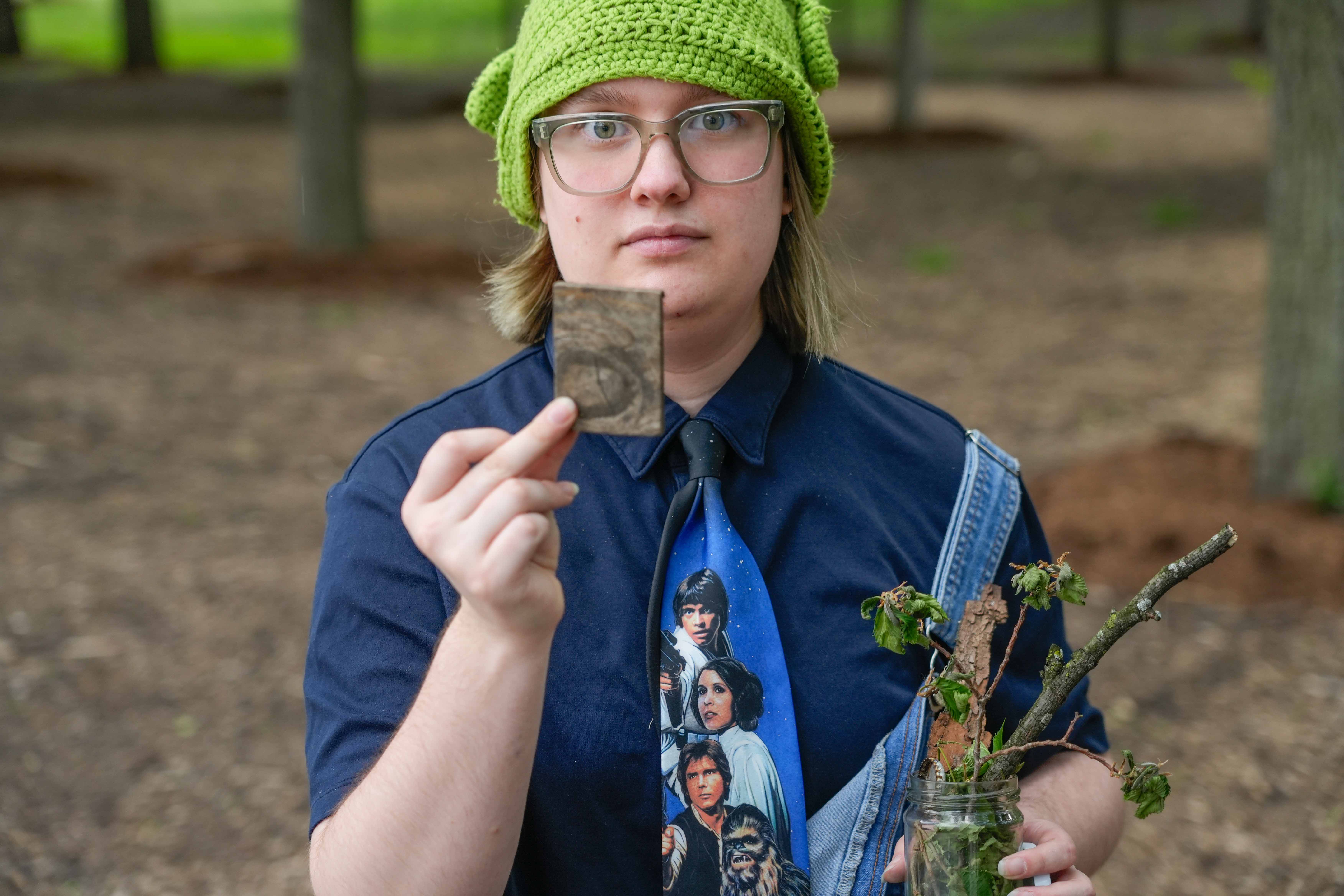
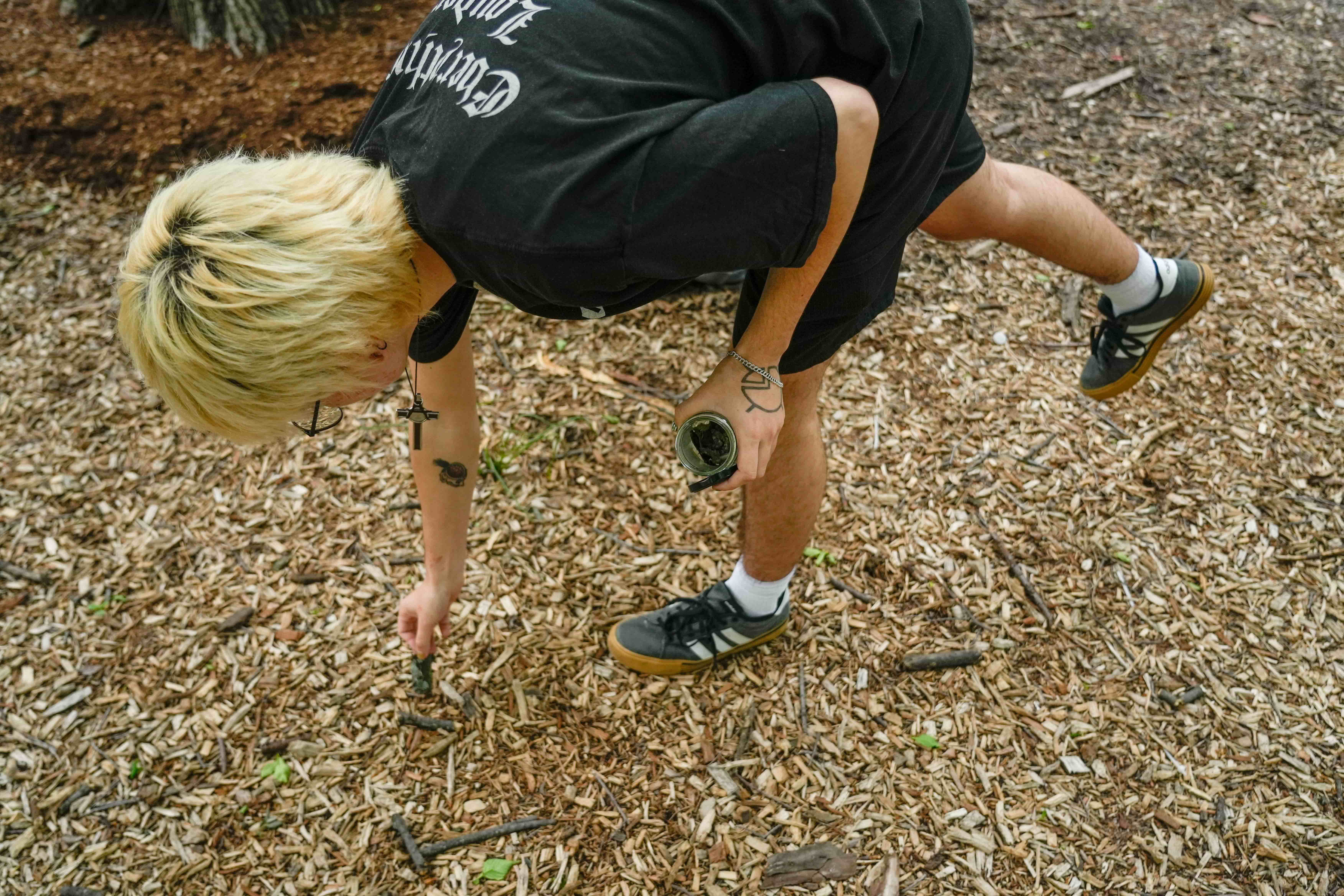
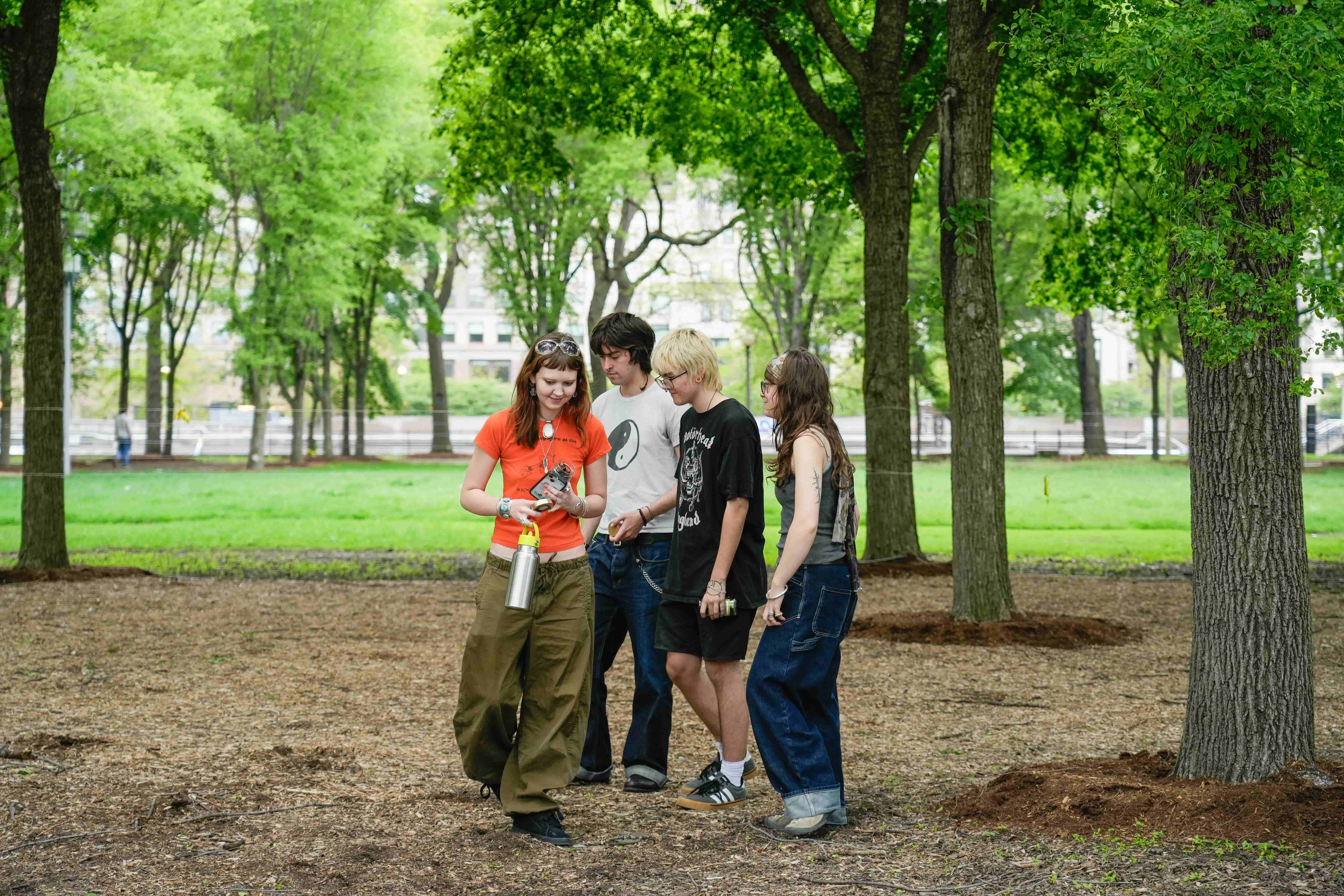
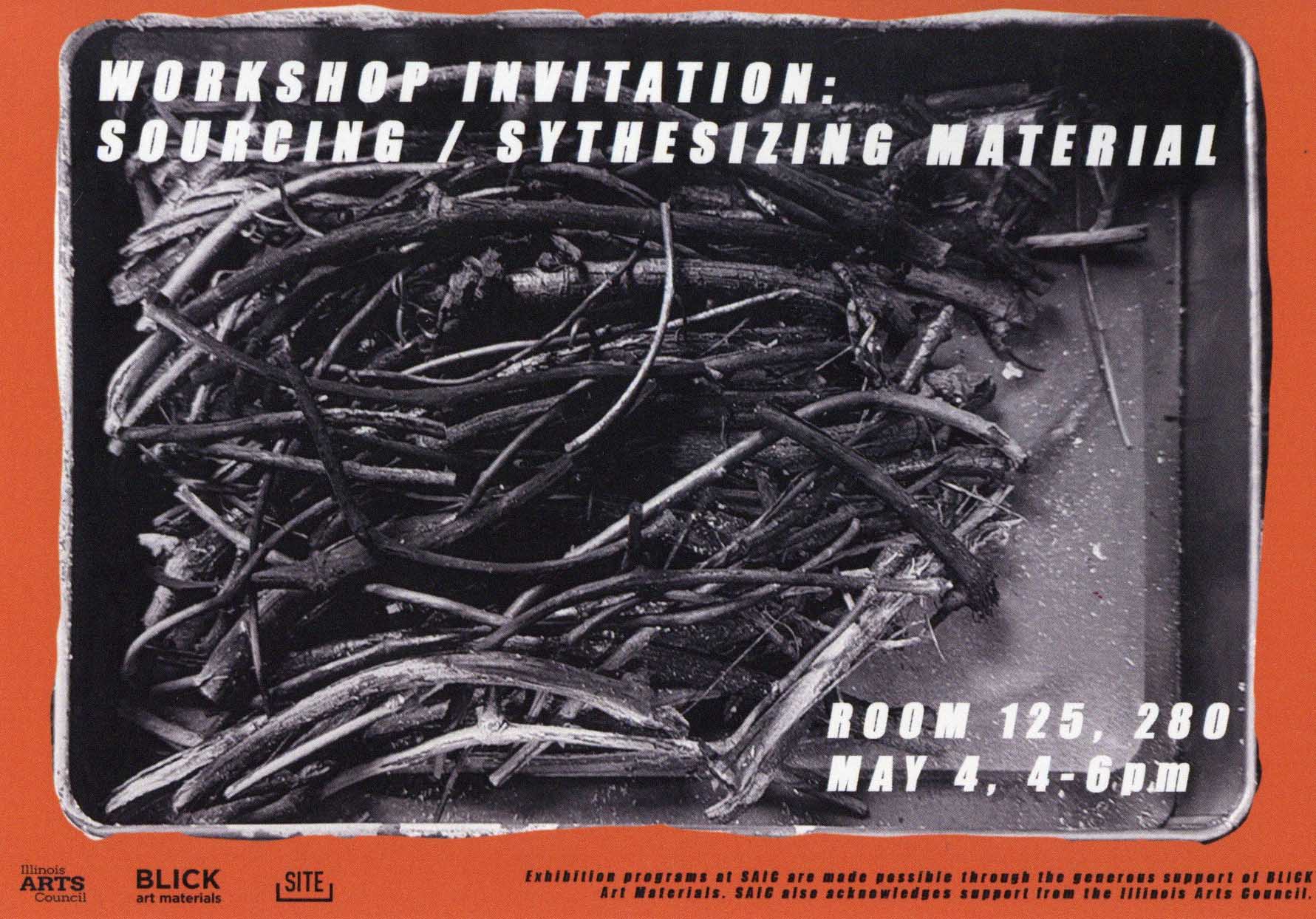
Sourcing and Synthesizing Material: A Workshop with Izzy Davis
May 4, 2026
280 Building, Room 125