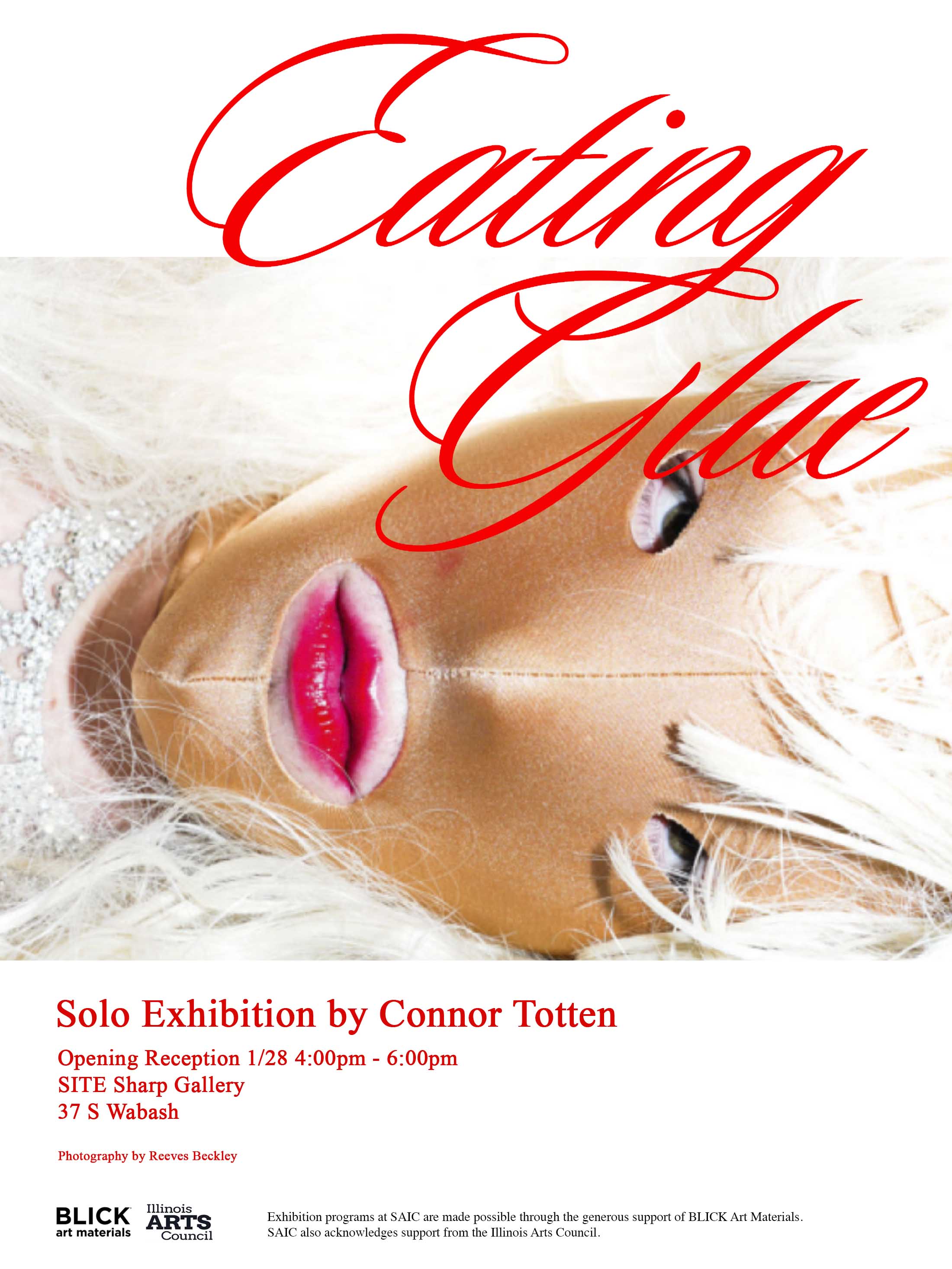
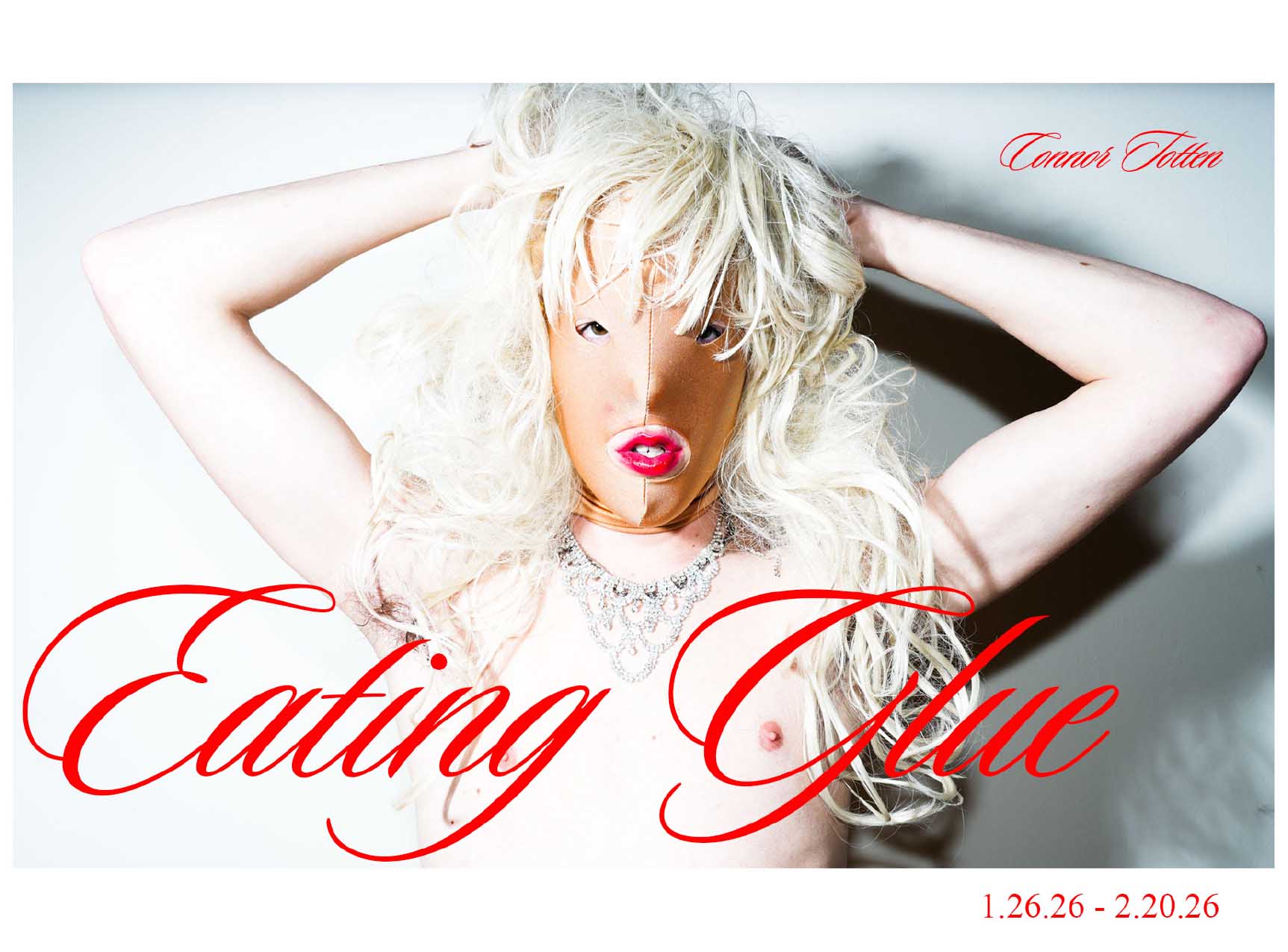
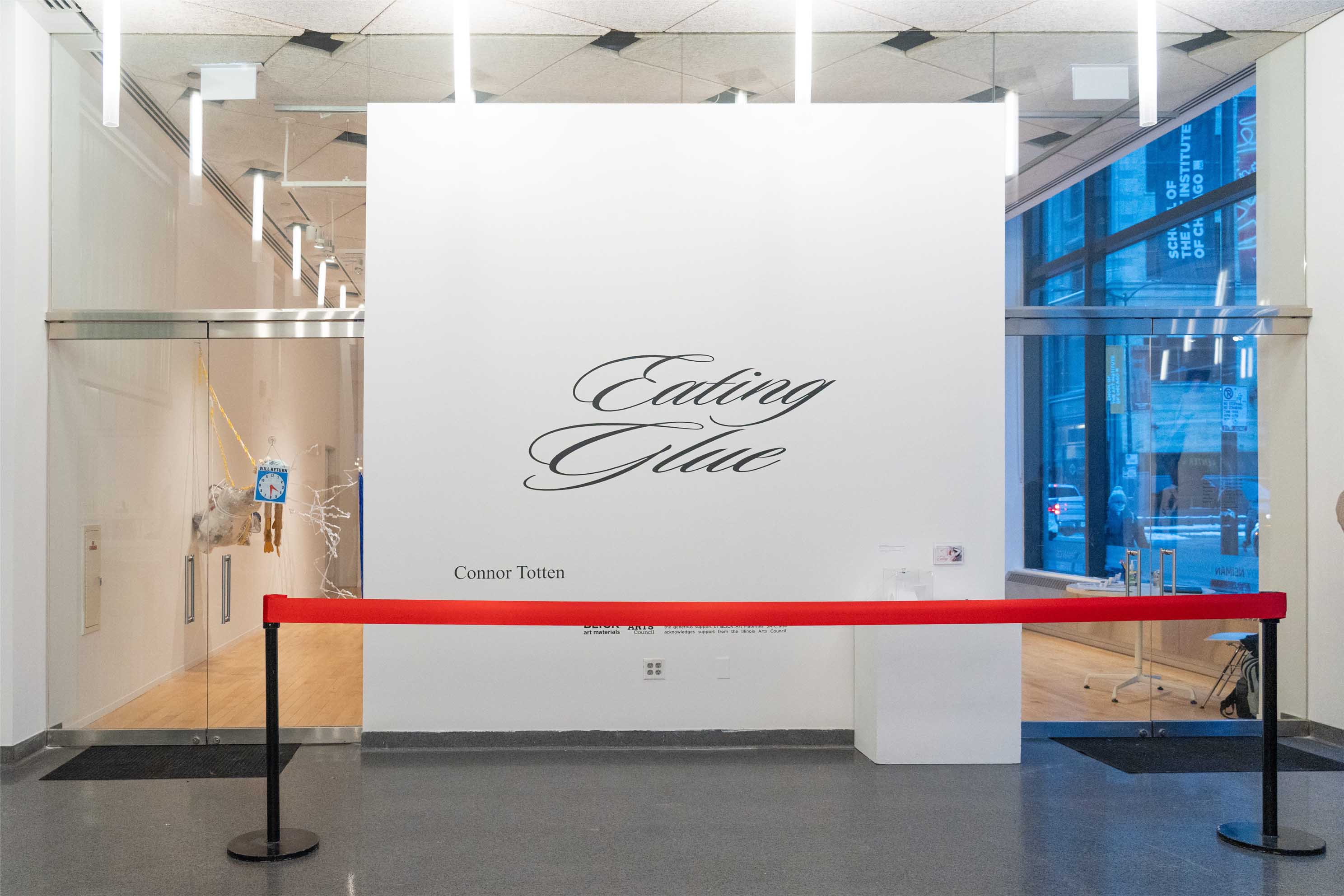
Eating Glue
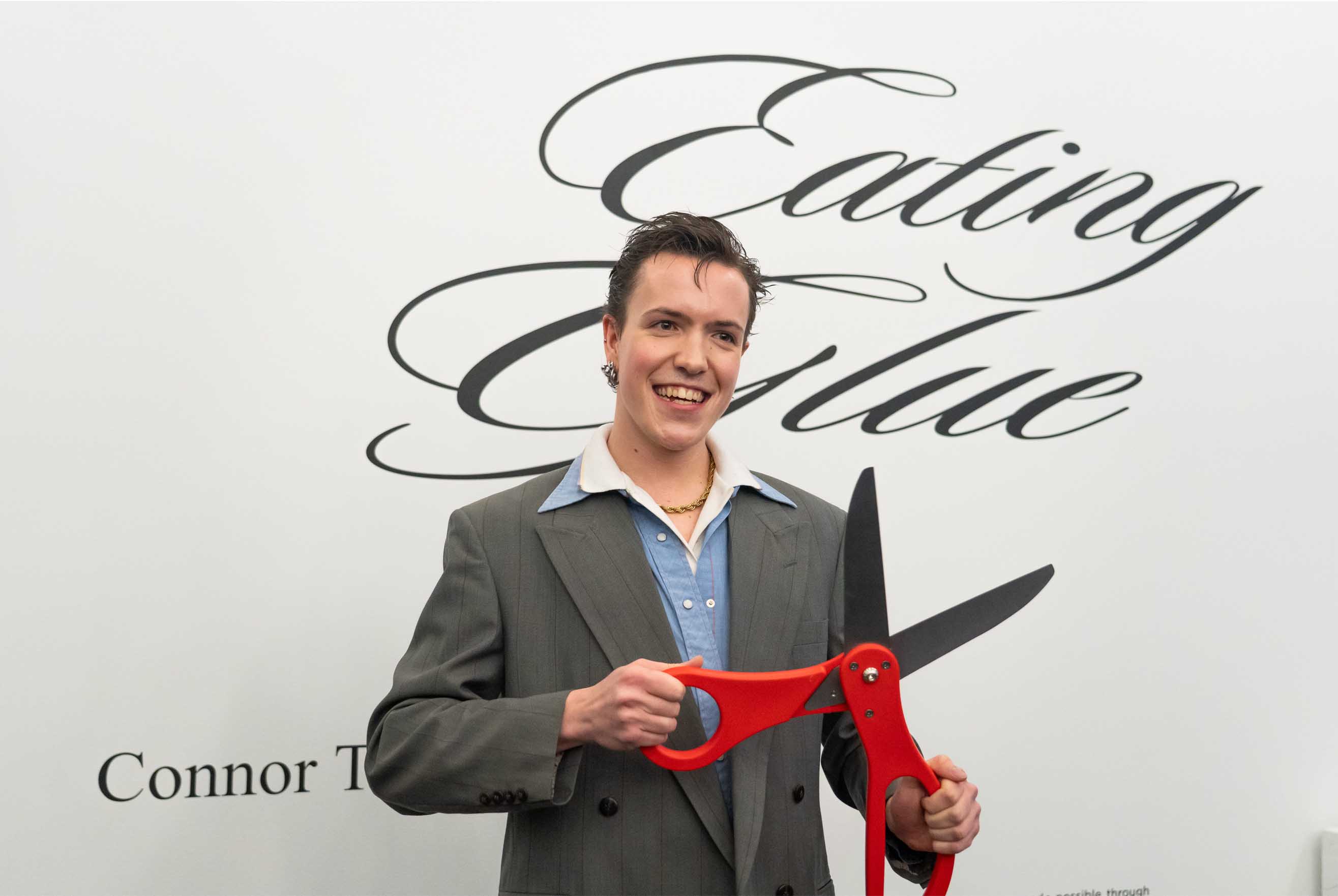
Connor Totten
January 26 – February 20, 2026
SITE Sharp Gallery
Contributing Artists
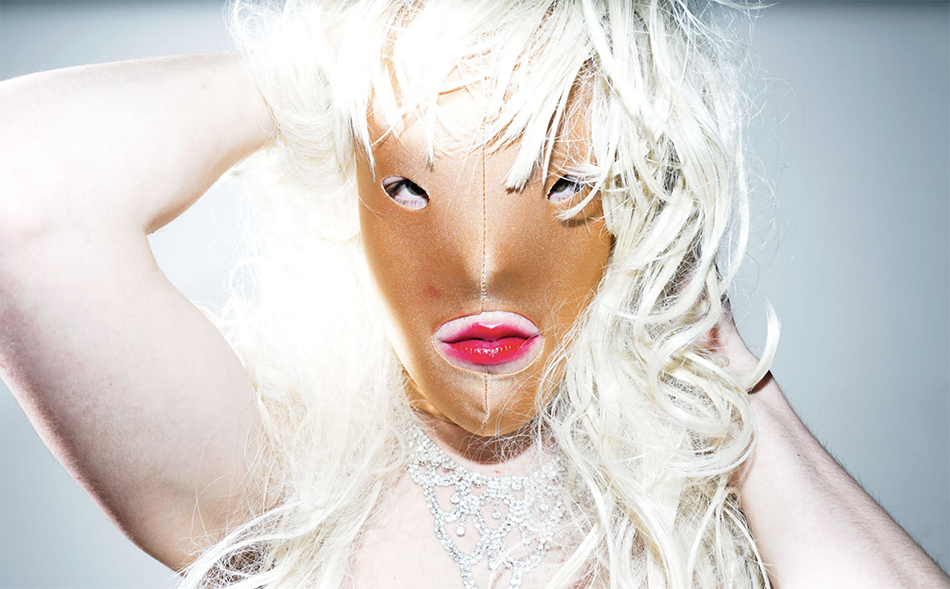
Connor Totten
Exhibition Statement as Preserved in the SUGS/SITE Archives:
“Just then, a cook clogged his throat. Skin and pubic hair smothered his face. It made him think of the pirate mask he used to wear every Halloween.” (Dennis Cooper, Closer, 1989)
Eating Glue emphasizes battling the desires of the self, seducing the self into the depths of fantasy and imagination. Escapism becomes a space to fantasize and dream; a mode of making love to yourself. Eating Glue is the universality of losing oneself through indulgence, perversion, romance, and companionship. The act of losing yourself through an attempt at being seen.
Eating Glue is a depiction of fatal curiosity. Eating Glue is indulgence, perversion, romance, addiction, the first encounter with misbehavior. Using imagination as rebellion, turning approval into disapproval, finding familiarity in the unfamiliar, walking through your house in the dark. Eating Glue is fearing the self, fearing what one is capable of, both internally and externally. Standing on a balcony and reminding yourself you could jump, or stripping yourself naked and running around the neighborhood. Eating Glue blurs the human spirit and behavior between the comfortable and uncomfortable.
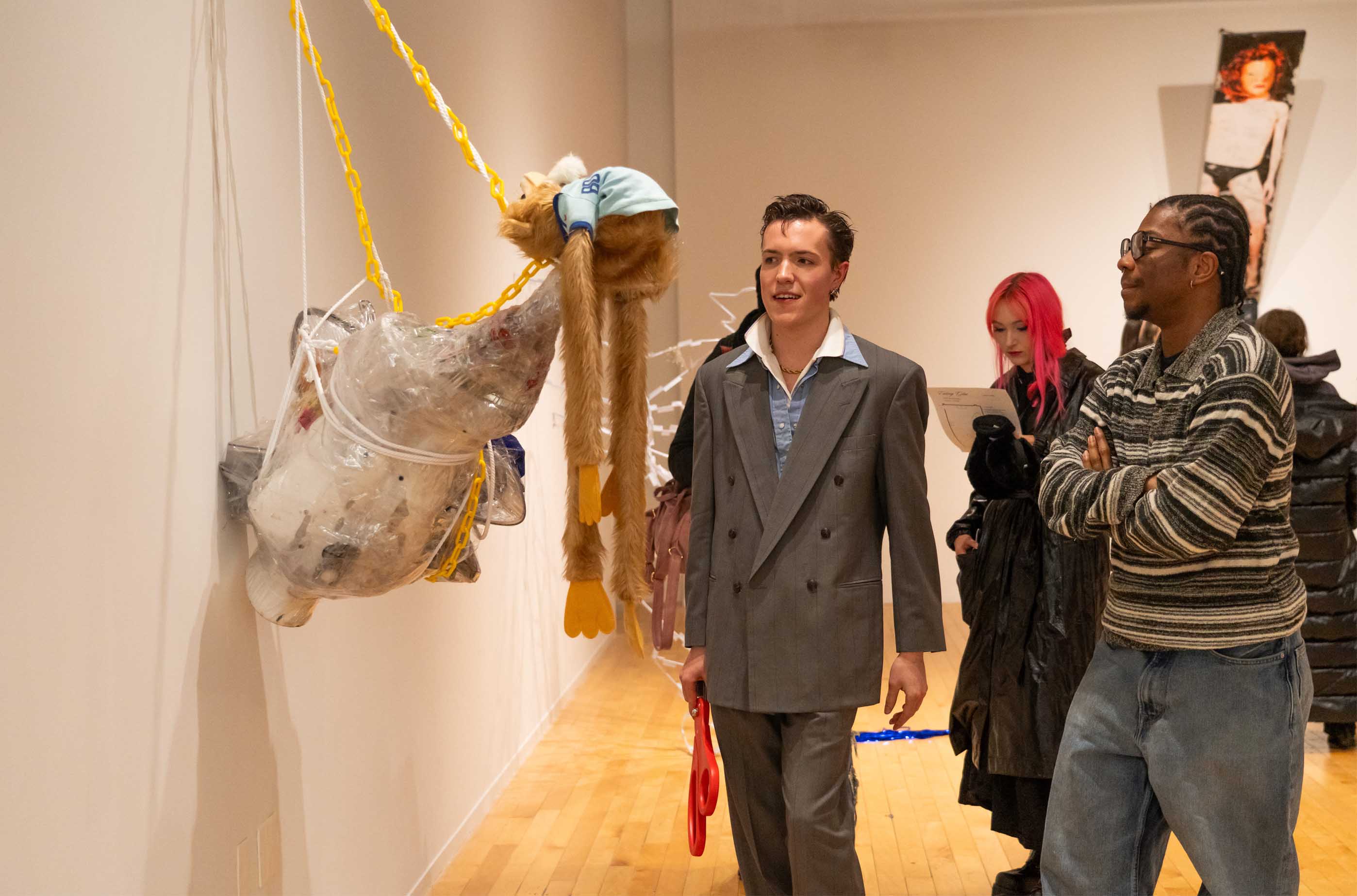
The works in this exhibition emphasize a form of play and curiosity through material exploration and subversion of objects. Challenging traditional sculpting methods, Totten subverts recognizable objects by using tape as an adhesive, cellophane as a varnish, and stacking and reconstructing objects to alter their context. Through this sense of play, there is an emphasis on theatrical orchestration of figures and objects in space, in ways of forming relationships, further challenging the viewer’s perception of freedom. While one figure, a metal body crawling up the wall with free-flowing hair, may be seen as free, another may be restricted from their freedom, shoved inside a brick of concrete or pierced at the audience through a pet cage. This notion of freedom is meant to suddenly invert itself, bringing in deeper fascination with the unattainable. Only desiring what you can’t attain, therefore becoming bored with what you have.
In a society of complete exposure; being able to consume anything at any time, you can’t help but desire more and more. Desire under surveillance? We embrace selflessness yet find it so easy to act so selfishly.
Why must I feel embarrassed for wanting everything I’ve never had?
Programs
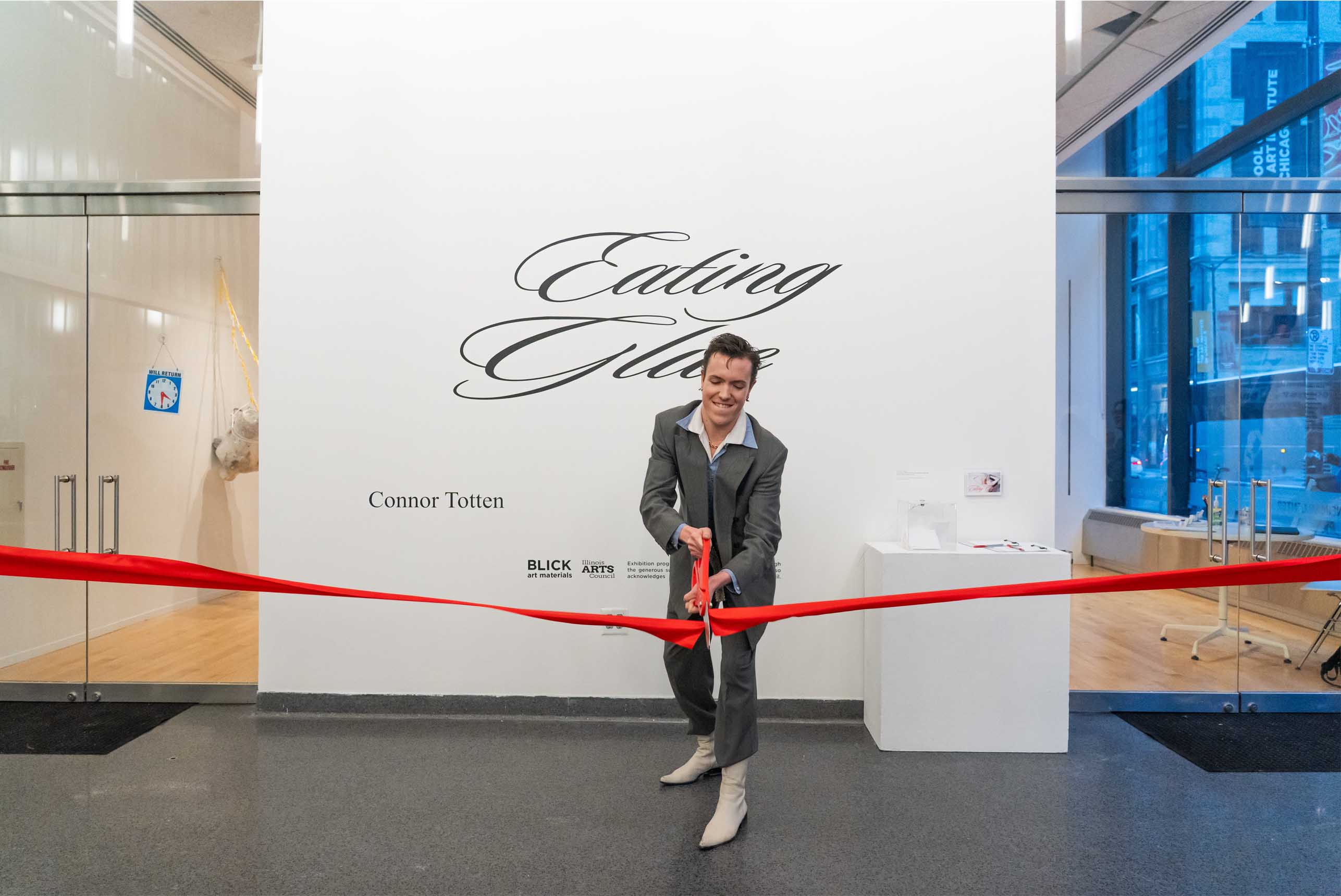
Opening Reception
Wednesday, January 28th
4:00-6:00 PM
SITE Sharp Galleries
Interview With Connor Totten
What’s your earliest art memory?
Probably being with my grandmother. She exposed me to art at a very young age and taught me how to sew when I was around seven. Afterwards, I started taking art classes at Joann’s and at school, which got me into doing technical theater in school. And that started to bring me to the museum to look at paintings and absorb whatever I can.
I notice your work is made exclusively with repurposed manufactured materials (sex dolls, televisions, rhinestones, etc.). Can you talk a little bit about how your choice of materials relates to your conceptual aims?
I find it interesting to work with materials and objects that have a preconceived history, and I like playing off of their given context, and that tells me where to go with what I want from the object. Conceptually, for example, all the sex dolls I just got from Amazon. I found that to be an important thing because I found that it talks about easy access to bodies, and easy access to intimacy and gay culture. It just provides more of a context than I would find working with a pure material. Although, you know, things are needed when they’re needed, but for the works in this show specifically, I was thinking about access to bodies.
Some big themes in this show are sexual indulgence and perversion, and it comes at a time when young people are having less sex than ever. How do you make sense of that?
Yeah, I think we’re all noticing that. And I think it’s brought to our attention in weird ways culturally…Since the sexual revolution, the culture around sex is kind of slowing down to where it was before.
Becoming more conservative?
Yeah, and that leads into other topics, but as conservatism grows more rampant it’s only made me more restless. You can go on the internet and look at anything at any moment and any time, and I find that so interesting in terms of our comfortability with each other’s bodies and our comfortability with nudity. Also, I’m thinking about COVID too, after that we were scared of being near each other. There’s also been a rise in talk around protection like PrEP and other queer oriented medications which are started to be offered more recreationally. And I find that to be interesting too, because as that starts to become more mainstream, people’s ignorance starts growing as well.
Do you have any daily rituals?
I’m really bad at routines, quite frankly. If I’m able to be at the studio for more than like two or three hours I try to spend 30 or 40 minutes just reading and researching at my desk, because if I don’t prioritize that then I would never get anywhere… I don’t know. I try not to stick to anything, because even before I started the semester I was like “Oh, what if I did a drawing a day, what if I did a painting a day?…” And I tried that and it was just like… I don’t want to do this. [laughs]
Can you talk about the literary influences in your work?
When I was coming up with the concept of the show, I was reading a lot of Dennis Cooper’s work. I read Closer, Frisk, The Sluts… I’d never read such true and vulgar writing before. And as extreme as everything that he writes about is, I just know it’s true, which I found to be really inspiring. That was kind of the jumpstart for the whole show, trying to capture that realness. In terms of other things, I grab references from all over. Like, I had this book of gun diagrams that I checked out from the library, and you would flip through and it would show you every single gun model ever and all the materials that you would need to construct it. I got into pricing out everything and seeing how much it would cost to build a firearm myself instead of buying one. Even though guns have little to do with what I’m trying to do, the specific function of each small part ended up being a good conceptual backbone.
If the Art Institute was on fire and you could only save one artwork, which one would it be and why?
As the museum’s burning down, I think the first thing I’d try to grab is probably that John Currin painting of the girls on the couch sipping martinis and smoking [Stamford After Brunch]. That grabs my attention every time I go in the contemporary wing. Oh! No, I would go in there and take Huck and Jim, the Charles Ray sculpture of two big steel men from Huckleberry Finn. Just because I watched a video about him when I was really young and then I remember going to the museum and being like oh my god they have it here.
Interview conducted and edited by Eugenio Salazar Castro